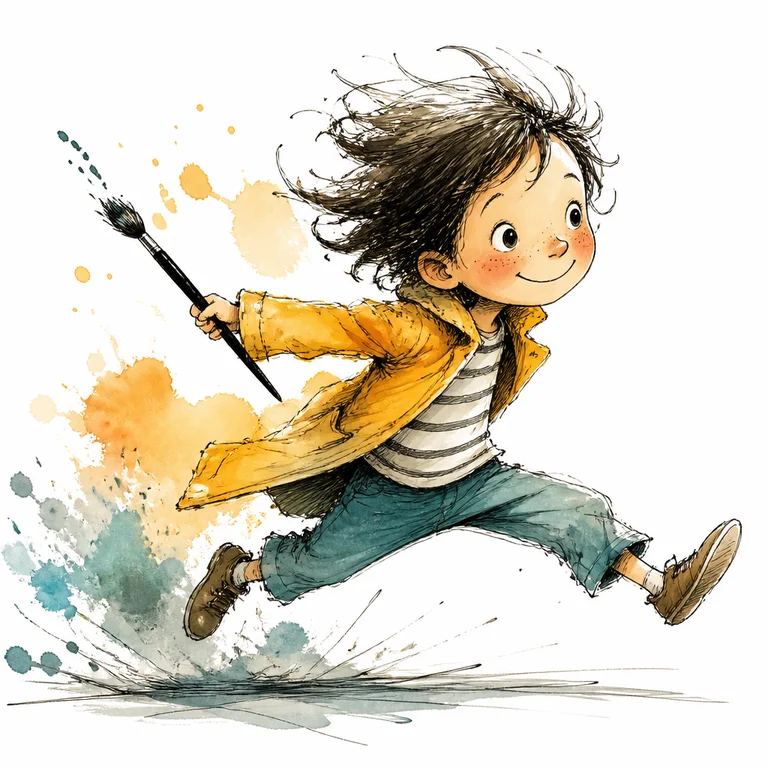
Description
Quentin Blake's illustrations for Roald Dahl — The BFG, Matilda, The Witches, James and the Giant Peach, Charlie and the Chocolate Factory (re-illustrated 1995) — are the visual face of a half-century of children's literature in English. The technique looks effortless and isn't. Three rules. First, line is laid down quickly with a dip pen and Indian ink on rough paper, with the variability and skips that come from speed and an ink-loaded nib; the line wobbles intentionally. Second, watercolor is washed in loosely, often bleeding past the line edge, in a restrained palette of three to five colors — never filling the line containers neatly. Third, characters are radically simplified: limbs as single strokes, eyes as small dots, mouths as a single curve, but the body language carries the whole emotional load — kinetic, unbalanced, mid-action. Use it for children's books, humorous editorial, greeting cards, anything that should feel handmade and warm, and any composition that benefits from energy over precision. Limitations: not for clean, not for moody, not for detailed environments. Models will give you generic "sketch style" — specify "Quentin Blake style, scratchy dip-pen ink line with skips, loose watercolor bleeding past the line, restrained 3–4 color palette, kinetic stick-limbed figures."
Three pioneers
Every style in this catalog names three verifiable pioneers. This is the part of the drop test that takes the longest to write and is the easiest to spot when it's missing.
-
Quentin Blake
British illustrator, born 1932. Illustrated 18 books with Roald Dahl from 1978 onward. Author or illustrator of over 300 books. Knighted in 2013. Founding trustee of the House of Illustration, London.
-
Ronald Searle
British illustrator, 1920–2011. Creator of St Trinian's and Molesworth. His scratchy, sardonic, ink-with-wash technique is the immediate predecessor to Blake's approach; Blake has cited him as a direct influence.
-
Edward Ardizzone
British illustrator, 1900–1979. Little Tim and the Brave Sea Captain (1936) established the British picture-book tradition of casual pen line with light watercolor wash. Was a teacher and mentor figure in the postwar UK illustration scene.
Contemporary revival
The 2022 Roald Dahl Story Company sale to Netflix for ~$686M (which kept Blake's illustrations central to the brand), the House of Illustration's 'Quentin Blake Centre for Illustration' opening in London (2026), and the persistent dominance of Blake's images in British primary-school art
The Roald Dahl–Netflix deal in 2021/2022 ($686M, per Variety) made Blake's illustrations a permanent part of streaming children's media. The Quentin Blake Centre for Illustration in Clerkenwell broke ground in 2024 with opening planned for 2026. The Wonka (2023) film used Blake-style flourishes in marketing and credits. #quentinblake on Instagram exceeds 90K posts. Tim Burton, Lauren Child (Charlie and Lola), and Oliver Jeffers all credit Blake as influence.
Working prompts
Three prompts we've tested against current FairStack models. Copy and run.
-
Quentin Blake style illustration, kinetic stick-limbed child running through field, dip-pen ink line with skips and wobbles, loose watercolor wash in red yellow and blue bleeding past the line, white paper showing through
-
Blake-style ink and watercolor, eccentric tall woman in patterned dress holding teacup, single-stroke limbs, expressive body language, three-color palette, hand-loaded ink line
-
scratchy pen-and-ink children's book illustration of three small figures around a giant peach, energetic line, loose watercolor wash, lots of white space
Recommended models
Models from FairStack's catalog that handle this style best. Sorted by price.
Related styles
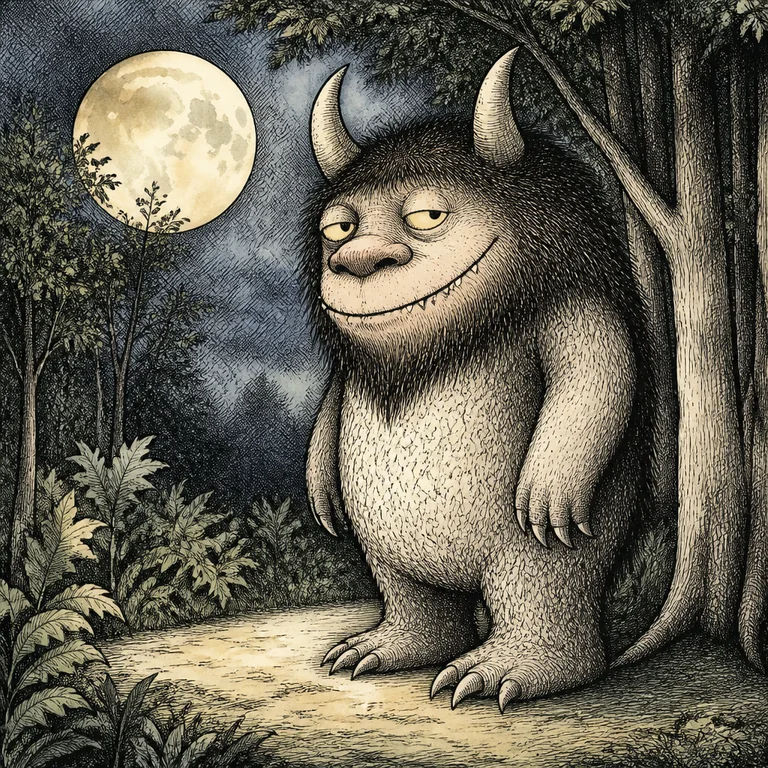
Maurice Sendak Crosshatch
Maurice Sendak's mature style — Where the Wild Things Are (1963), In the Night Kitchen (1970), Outside Over There (1981) — is built on de…
Open style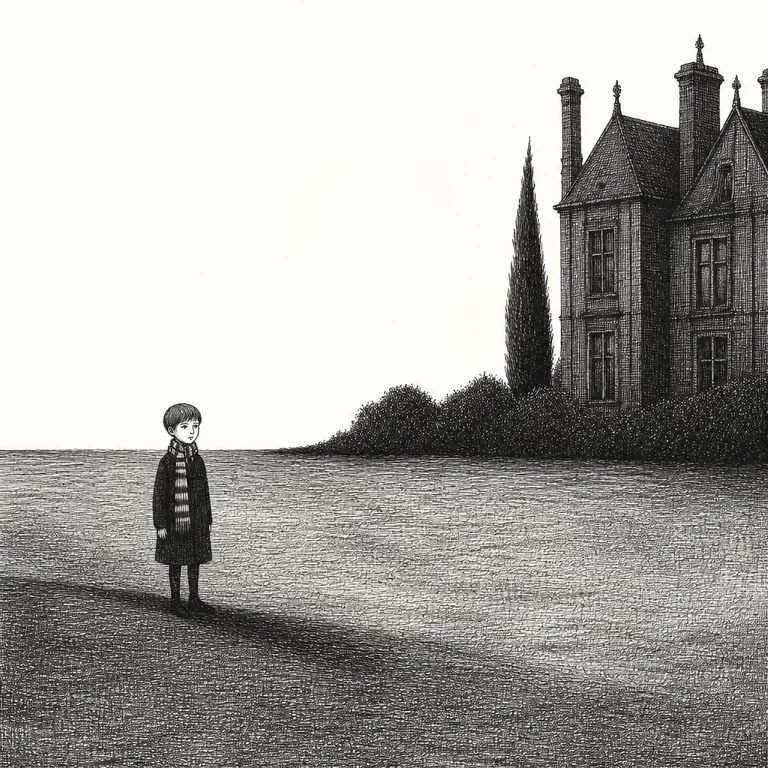
Edward Gorey Crosshatched Gothic
Edward Gorey produced more than 100 small books between 1953 and his death in 2000, each one set in a faintly Edwardian elsewhere and ren…
Open style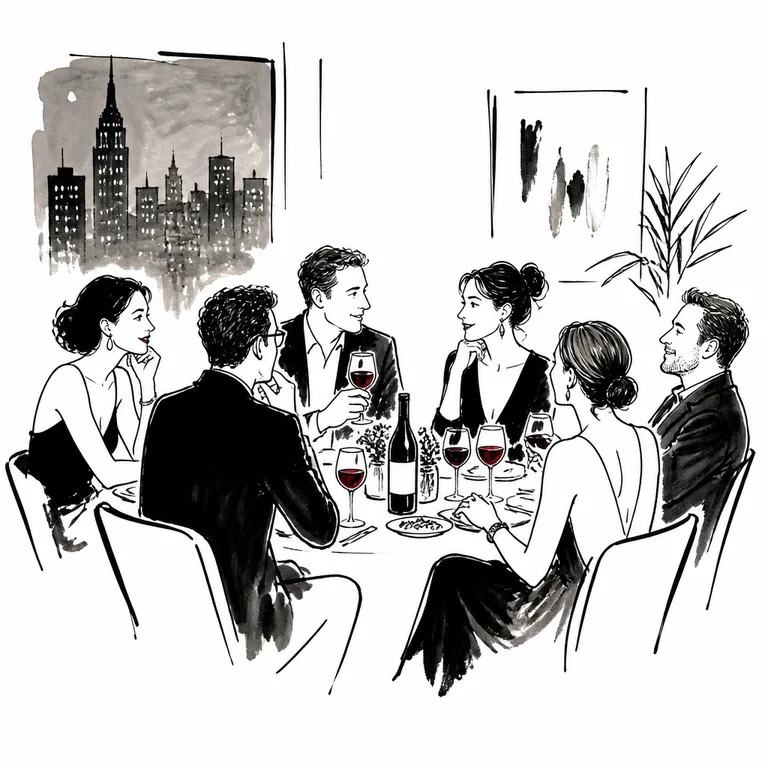
New Yorker Editorial Ink
The New Yorker has run editorial illustration and cartoons in a coherent visual language for nearly a century. The style is not one artis…
Open style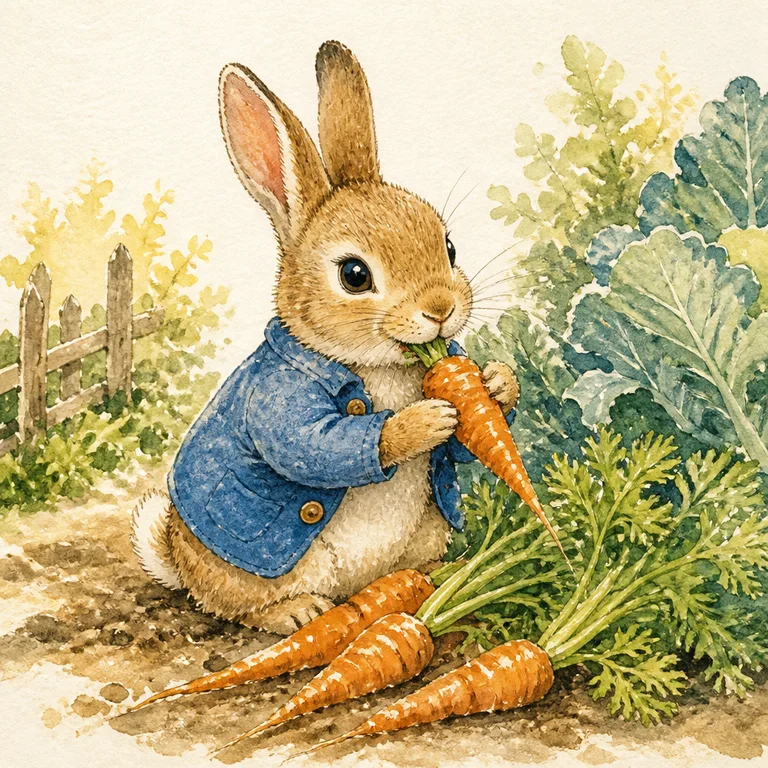
Children's Book Watercolor
"Children's book watercolor" is not one style — it is a continuous tradition stretching from Beatrix Potter's Peter Rabbit (1902) through…
Open style