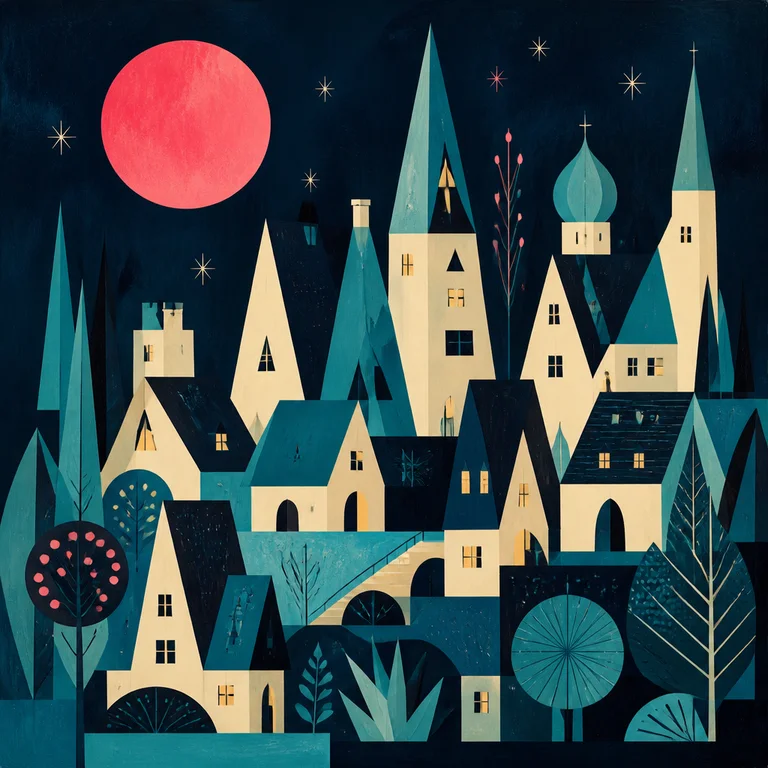
Description
Mary Blair's concept art for Disney between 1940 and 1965 — Cinderella, Alice in Wonderland, Peter Pan, and the It's a Small World ride — set the rules for mid-century stylized illustration. The grammar is tight and unmistakable. Flat, opaque shapes built from gouache; no rendering of volume except through color temperature shifts; characters and architecture reduced to geometric primitives (triangles for trees, ovals for heads, rectangles for buildings); palettes of three to five hand-mixed colors per scene with one unexpected accent — a hot pink against teal, a mustard against navy; perspective that ignores realism in favor of decorative flatness, often presenting all faces of a building at once like a Persian miniature. Use it for children's books, retail signage with a 1950s feel, theme-park-style illustration, midcentury-modern editorial, animated short concept art, and any composition that should feel optimistic, decorative, and graphic. It does not do photoreal, gritty, or modern minimalism. Models will give you generic "1950s cartoon" if you ask vaguely — specify "Mary Blair concept art, flat gouache shapes, geometric primitives, three-color palette plus one accent, decorative flat perspective" to land the actual look.
Three pioneers
Every style in this catalog names three verifiable pioneers. This is the part of the drop test that takes the longest to write and is the easiest to spot when it's missing.
-
Mary Blair
American artist and animator. Joined Disney 1940; her concept art for Cinderella (1950), Alice in Wonderland (1951), and Peter Pan (1953) defined Disney's color and styling. Designed It's a Small World for the 1964 World's Fair.
-
Eyvind Earle
Concept artist and stylist for Disney's Sleeping Beauty (1959). His decorative-flat backgrounds — medieval tapestry geometry on a 70mm widescreen frame — share Blair's stylized-flat lineage.
-
Alice and Martin Provensen
Husband-wife illustration team. Worked at Disney in the 1940s alongside Blair before producing decades of celebrated children's books (The Color Kittens, A Visit to William Blake's Inn). Same decorative-flat-shape vocabulary; explicit Blair-school descendants.
Contemporary revival
John Canemaker's The Art and Flair of Mary Blair (2003/2014 reissue), the persistent Disney Parks merchandising of Blair designs, and the influence on contemporary picture-book illustrators like Marc Boutavant and Jon Klassen
Canemaker's monograph is still in print and on its third edition. Disney's 2023 'Mary Blair Collection' merchandise line was the centerpiece of D23 Expo retail. #maryblair on Instagram exceeds 220K posts. The Eric Carle Museum hosted a major Blair retrospective in 2022. Picture-book illustration on the New York Times Best Illustrated lists in 2023–2024 (Jon Klassen, Christian Robinson, Vashti Harrison) reads as direct Blair-lineage.
Working prompts
Three prompts we've tested against current FairStack models. Copy and run.
-
Mary Blair concept art, flat gouache illustration of a small village at night, geometric pointed-roof houses, three-color palette of teal navy and warm cream with hot pink moon, decorative flat perspective showing all building faces
-
1950s Disney concept art style, stylized girl in red coat walking through abstract forest of triangular green trees, flat shapes, no rendering, hand-mixed gouache textures
-
It's a Small World style illustration, decorative flat carnival scene, mustard and turquoise palette with hot pink accent, geometric children figures, ornamental architecture
Recommended models
Models from FairStack's catalog that handle this style best. Sorted by price.
Related styles
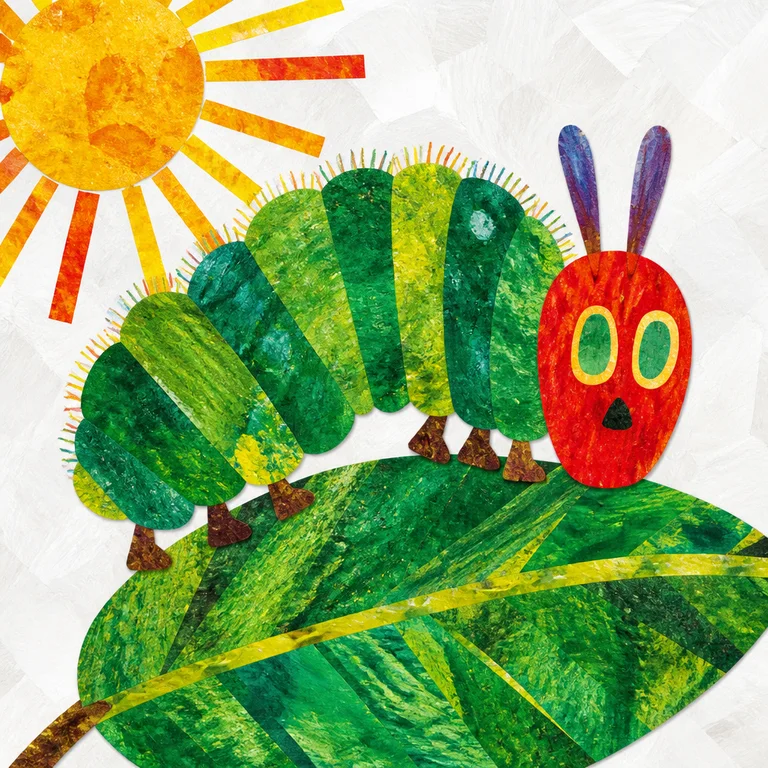
Eric Carle Collage
Eric Carle's method was specific and physical: he painted large sheets of tissue paper by hand with acrylics — splatters, brushwork, fing…
Open style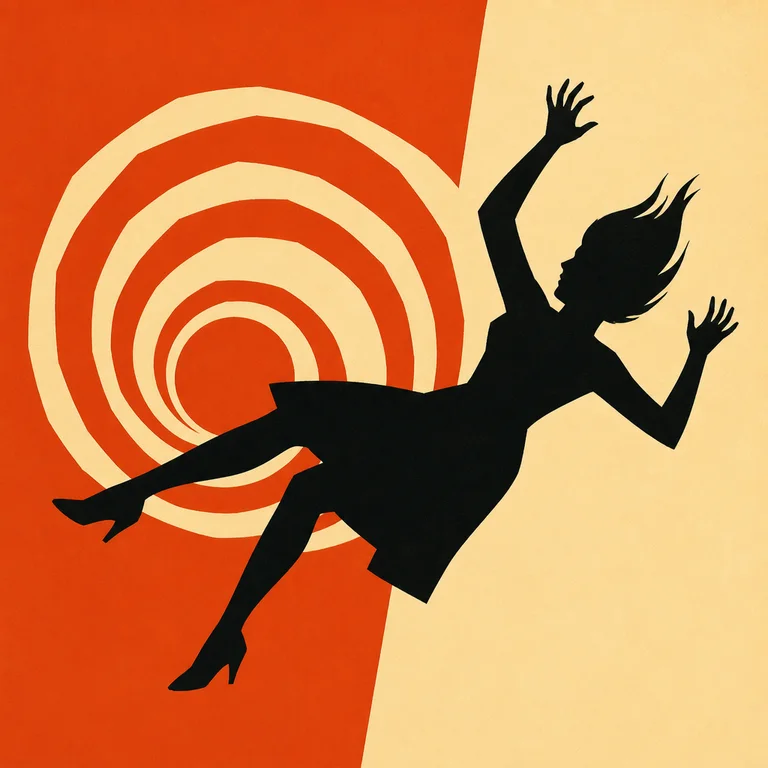
Saul Bass Title Card
Saul Bass (1920–1996) redefined what film title sequences could be — he made them part of the film, not a list of names to skip — and the…
Open style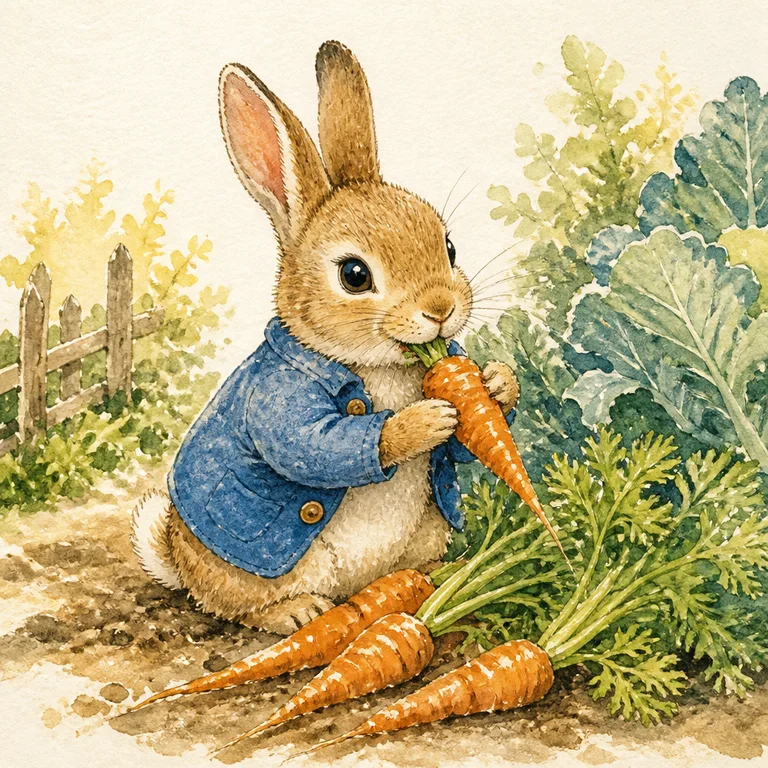
Children's Book Watercolor
"Children's book watercolor" is not one style — it is a continuous tradition stretching from Beatrix Potter's Peter Rabbit (1902) through…
Open style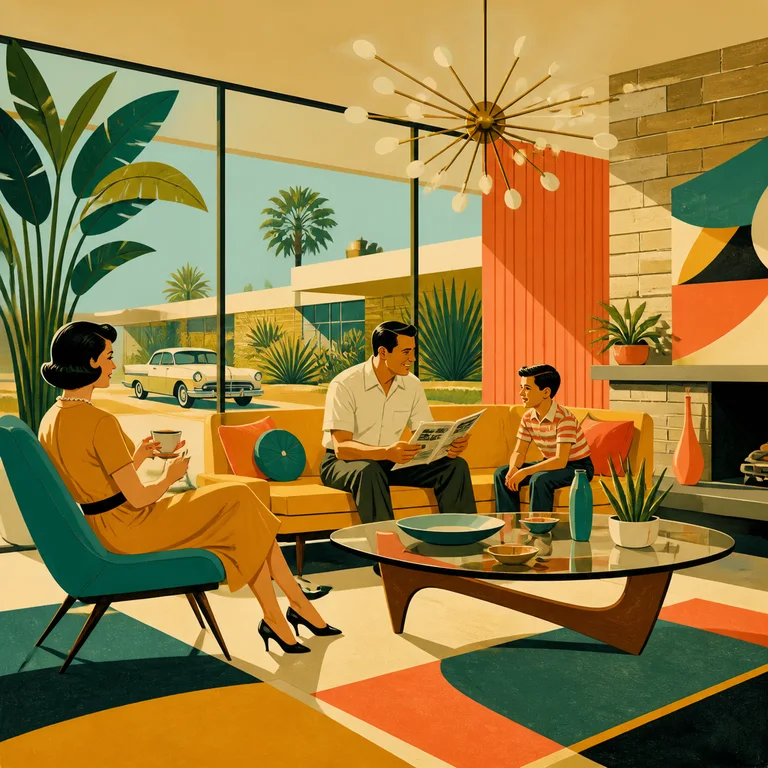
1950s Mid-Century Modern
Mid-century modern is the visual language of postwar American optimism, roughly 1947 to 1965, born in California, Scandinavia, and Italy…
Open style