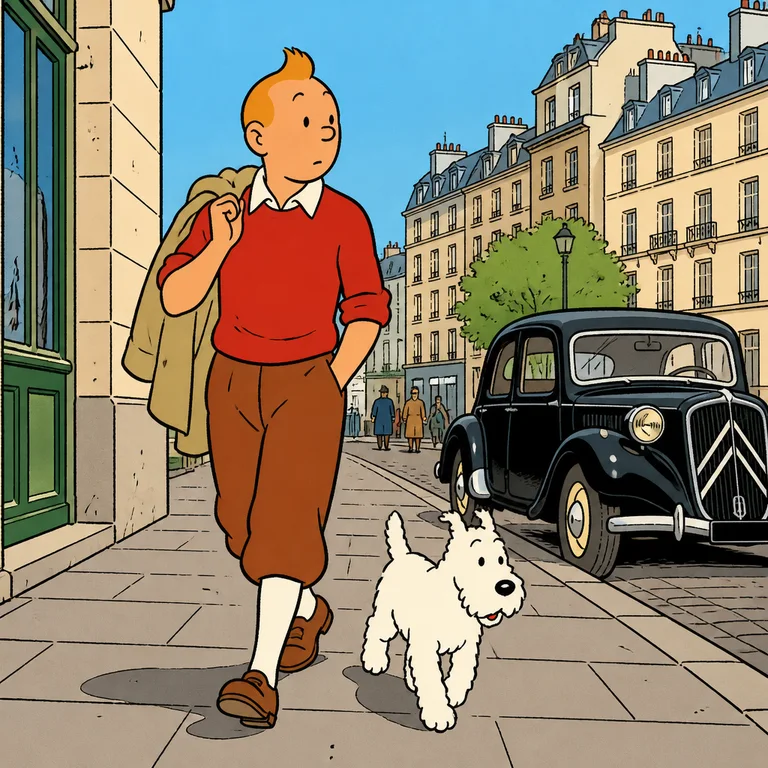
Description
Ligne claire ("clear line") is the Franco-Belgian comic style codified by Hergé in The Adventures of Tintin (1929–1976) and named by Joost Swarte in 1977. It is the foundation of the European bande dessinée tradition and one of the most rigorously defined visual systems in comics. Rules: every contour line is a single, even-weight black line — no varying thickness, no hatching, no crosshatching for shadow; color is laid down as flat opaque shapes inside the line, with no gradient or modeling; shadows are simplified to flat darker shapes or omitted entirely; figures, vehicles, and architecture are drawn with technical precision — Hergé's car backgrounds are studied from photographs, his airplanes are accurate to the model; compositions are calm and clear; backgrounds are as carefully drawn as the foreground; characters are stylized but environments are realistic. Use it for adventure imagery, travelogue, retro Euro-comic homage, instructional and editorial illustration, architectural and transportation subjects, and any composition that should feel meticulous, calm, and continental. Limitations: not for grit, not for moody lighting, not for high action. Models will overshoot into generic "cartoon" — specify "Hergé ligne claire style, single even-weight black contour line throughout, flat opaque color inside line, no hatching, no gradient, realistic background detail with stylized characters, 1950s European bande dessinée."
Three pioneers
Every style in this catalog names three verifiable pioneers. This is the part of the drop test that takes the longest to write and is the easiest to spot when it's missing.
-
Hergé (Georges Remi)
Belgian cartoonist, 1907–1983. Created Tintin in 1929; 24 albums published through 1976. The ligne claire grammar was refined through the 1940s–60s in close collaboration with his Studio Hergé team. Over 250M Tintin albums sold worldwide.
-
Edgar P. Jacobs
Belgian cartoonist, 1904–1987. Worked at Studio Hergé before launching Blake and Mortimer (1946–). His more text-dense, architecturally elaborate version of ligne claire is the second canonical voice of the style.
-
Joost Swarte
Dutch cartoonist and designer, born 1947. Coined the term 'ligne claire' (klare lijn) in 1977 to describe Hergé's lineage and revived the style in contemporary comics and graphic design (including New Yorker covers).
Contemporary revival
Steven Spielberg's The Adventures of Tintin (2011), the ongoing French and Belgian bande dessinée publishing scene, the persistent influence on contemporary illustrators including Charles Burns, Chris Ware, and Jordan Crane, and the 2026 Belgian-government Tintin centenary programming
Spielberg's Tintin (2011) grossed $374M worldwide and a sequel directed by Peter Jackson has been in development since. Casterman publishes new Tintin material continuously; the franchise sells ~3M albums per year. The Hergé Museum in Louvain-la-Neuve has hosted over 1M visitors since opening in 2009. #ligneclaire on Instagram exceeds 70K posts. New Yorker covers by Joost Swarte and Adrian Tomine read as explicit ligne claire descendants. The 2026 Tintin centenary is generating major museum and publishing programming.
Working prompts
Three prompts we've tested against current FairStack models. Copy and run.
-
Hergé ligne claire style, young reporter in plus-fours and red sweater with white terrier dog, single even-weight black contour line throughout, flat opaque color, realistic 1950s European city street background with parked Citroën, no hatching, calm clear composition
-
bande dessinée ligne claire, two men in suits investigating a temple, flat color, realistic detailed architecture, stylized characters, single black outline, 1960s European comic style
-
Tintin-style adventure illustration, vintage seaplane over tropical island, ligne claire technical precision on aircraft, flat opaque palette, no gradient
Recommended models
Models from FairStack's catalog that handle this style best. Sorted by price.
Related styles
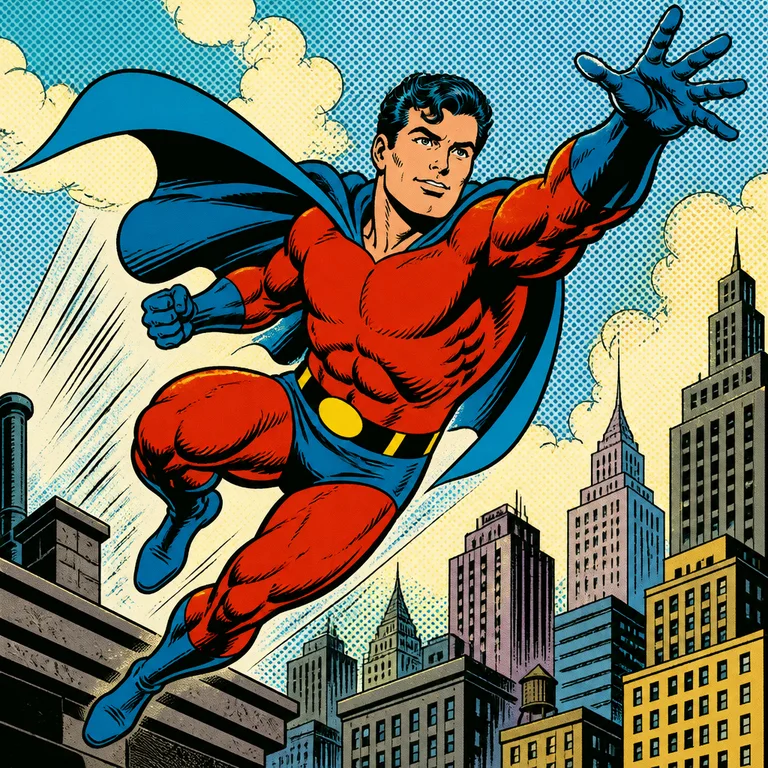
Silver Age Superhero
The Silver Age of American superhero comics runs from roughly 1956 (DC's revival of The Flash in Showcase #4) to about 1970. The visual g…
Open style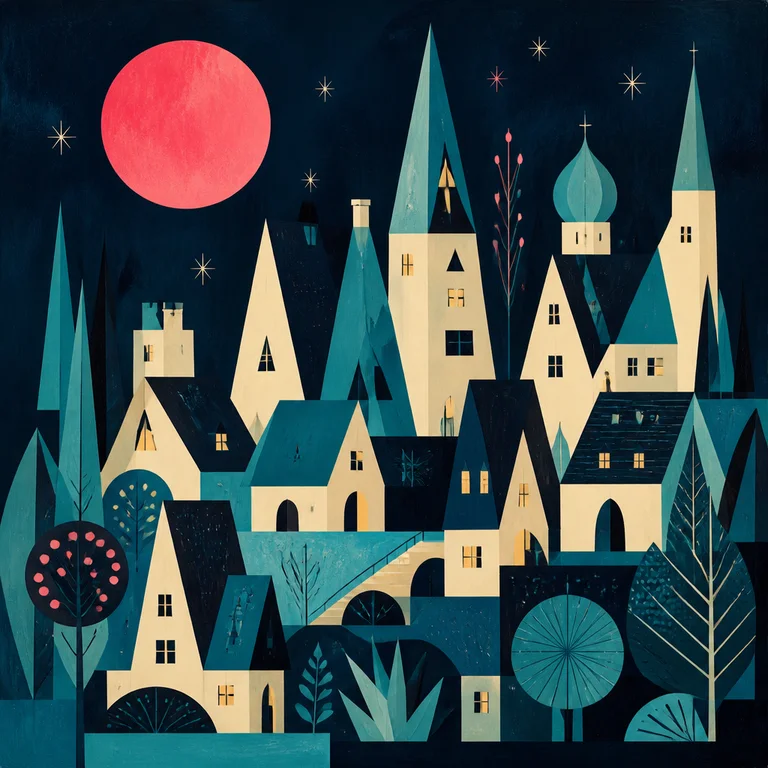
Mary Blair Mid-Century
Mary Blair's concept art for Disney between 1940 and 1965 — Cinderella, Alice in Wonderland, Peter Pan, and the It's a Small World ride —…
Open style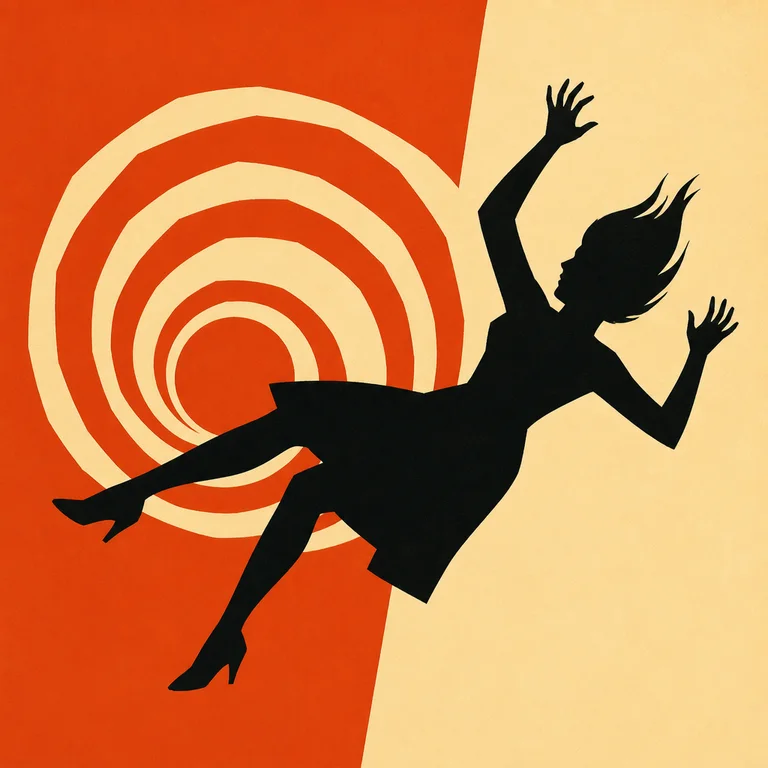
Saul Bass Title Card
Saul Bass (1920–1996) redefined what film title sequences could be — he made them part of the film, not a list of names to skip — and the…
Open style
New Yorker Editorial Ink
The New Yorker has run editorial illustration and cartoons in a coherent visual language for nearly a century. The style is not one artis…
Open style