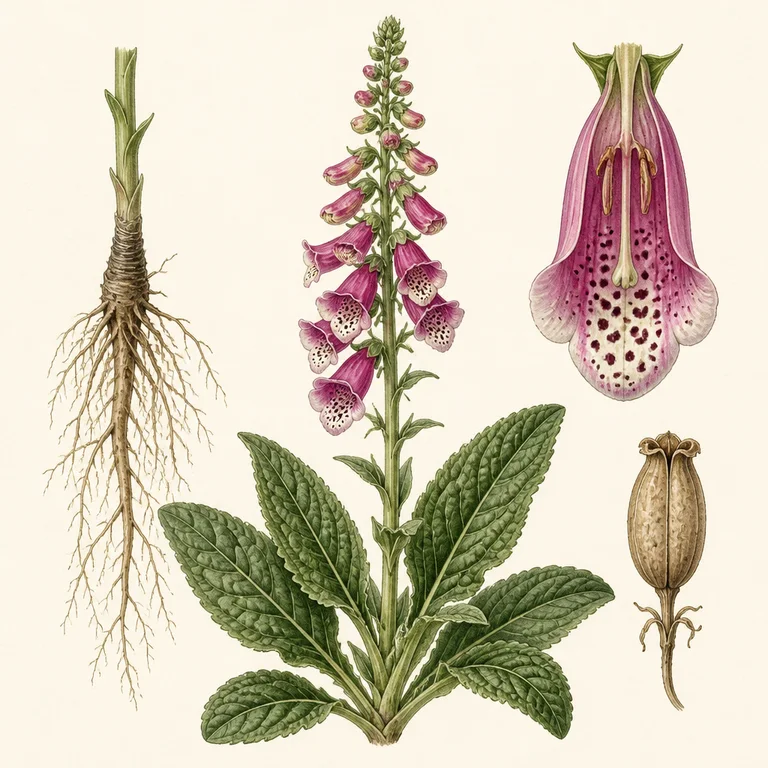
Description
Botanical scientific illustration is the four-century discipline of rendering a plant accurately enough to identify the species while making it beautiful enough to hang on a wall. It is not loose botanical decoration and it is not cottagecore floral pattern — it is a documentary craft with its own rules, developed before photography and still practised because a camera cannot show every diagnostic feature of a plant at once. Visual rules: a single specimen isolated on a plain pale ground, often with the root, a cross-sectioned flower, a seed, and a fruit shown together at different life stages on the same plate; precise outline drawn first, then watercolour or stippled engraving built in transparent layers; botanically correct venation, leaf attachment, and floral structure (a real illustrator counts the stamens); restrained, observed colour rather than saturated decoration; a calm, even, almost shadowless light; frequently a hand-lettered Latin binomial. Use it for naturalist plates, herbal and apothecary branding, museum-style prints, packaging that wants old-world authority, and editorial nature work. It does not do dramatic lighting, painterly looseness, or full scenic backgrounds — the plant is the subject and the page is mostly empty. Models default to generic "flower painting." Specify "botanical scientific illustration plate, single specimen isolated on pale ground, root and cross-sectioned flower and seed shown together, precise stippled watercolour, accurate venation, hand-lettered Latin name."
Three pioneers
Every style in this catalog names three verifiable pioneers. This is the part of the drop test that takes the longest to write and is the easiest to spot when it's missing.
-
Maria Sibylla Merian
German naturalist and illustrator, 1647–1717. Her Metamorphosis Insectorum Surinamensium (1705), produced after a self-funded expedition to Suriname, paired insects with the exact host plants they fed on — the first ecological botanical illustration rather than isolated specimens.
-
Pierre-Joseph Redouté
Belgian-French painter, 1759–1840. Court artist to Empress Joséphine; documented her rose collection at the Château de Malmaison in Les Roses (1817–1824), the defining stipple-engraving rose plates and still the most reproduced botanical images in the world.
-
Ernst Haeckel
German biologist and artist, 1834–1919. Kunstformen der Natur (Art Forms in Nature, 1899–1904) rendered radiolaria, diatoms, and orchids with a symmetry-driven, Art-Nouveau-feeding precision that pushed scientific illustration toward the decorative without abandoning accuracy.
Contemporary revival
The Royal Botanic Gardens Kew / RHS Lindley Collections print-and-licensing economy, the Society of Botanical Artists, and the cottagecore-botanical and fine-line botanical-tattoo wave
Kew Gardens drew over 2.5 million visitors in 2023 and runs a continuous Shirley Sherwood Gallery of Botanical Art programme — the only gallery in the world dedicated solely to botanical art — alongside a large print-licensing business. The Royal Horticultural Society's Lindley Library awards its Botanical Art & Photography medals annually and the Society of Botanical Artists (founded 1985) holds a yearly London exhibition. Redouté's rose plates remain among the highest-circulation public-domain print images on Etsy and museum shops. The botanical-tattoo and fine-line-foliage style is one of the most-saved tattoo categories on Pinterest, and #botanicalillustration on Instagram exceeds 1M posts — search-driven by the cottagecore aesthetic peak of 2020–2023 that has since hardened into a stable interiors and stationery category.
Working prompts
Three prompts we've tested against current FairStack models. Copy and run.
-
Botanical scientific illustration plate of a single foxglove specimen isolated on cream paper, root system and a cross-sectioned flower and a seed pod arranged on the same page, precise stippled watercolour in observed muted colour, accurate venation and leaf attachment, hand-lettered Latin binomial, calm even shadowless light, 18th-century plate convention
-
Redouté-style rose plate, single open garden rose with bud and thorned stem on plain pale ground, transparent layered watercolour, stipple-engraving delicacy, restrained colour, museum print
-
Haeckel-style symmetrical natural-form plate, radiating arrangement of orchids and seed structures on dark ground, fine ink and watercolour, decorative symmetry without losing botanical accuracy
Recommended models
Models from FairStack's catalog that handle this style best. Sorted by price.
Related styles
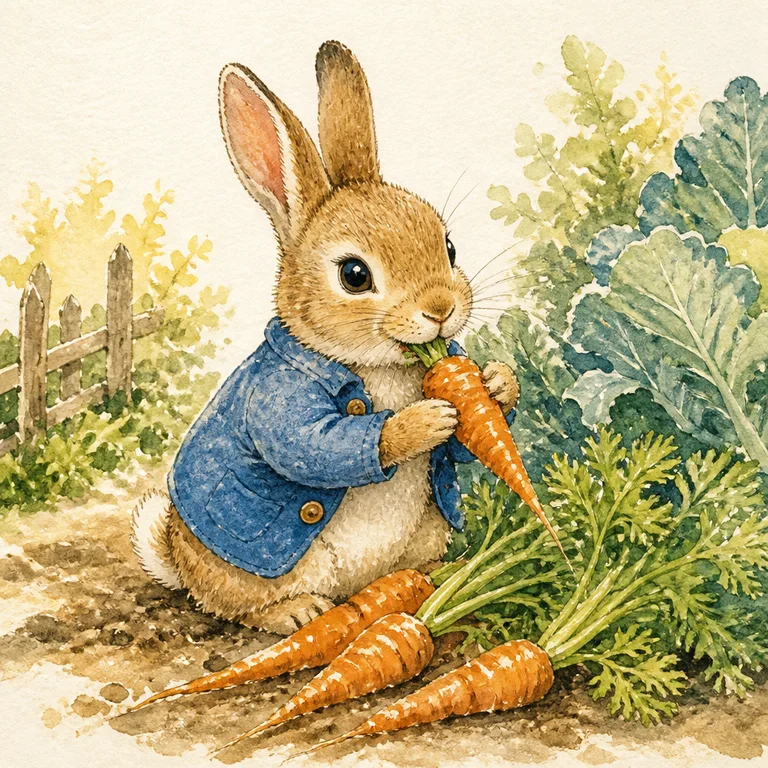
Children's Book Watercolor
"Children's book watercolor" is not one style — it is a continuous tradition stretching from Beatrix Potter's Peter Rabbit (1902) through…
Open style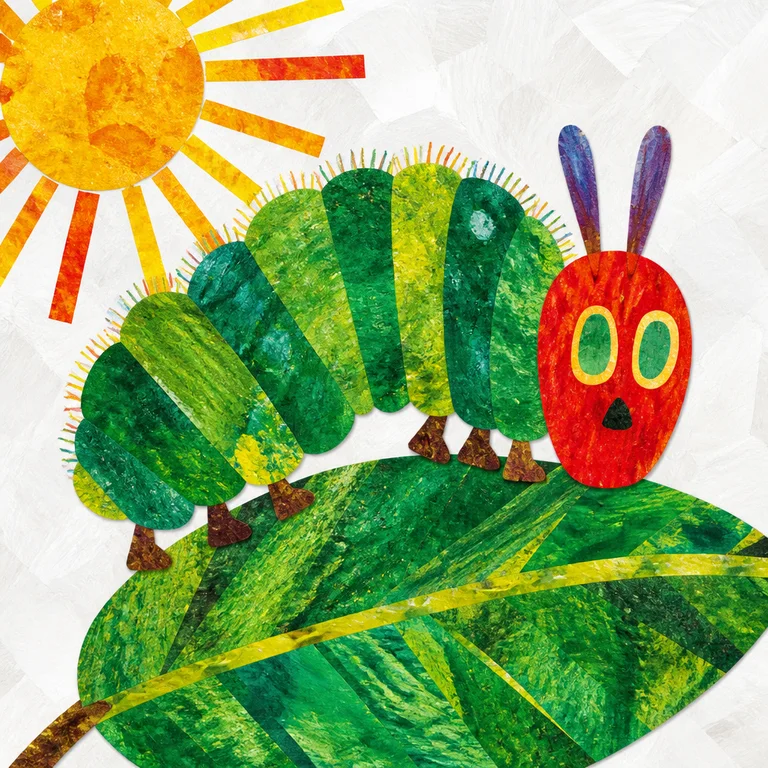
Eric Carle Collage
Eric Carle's method was specific and physical: he painted large sheets of tissue paper by hand with acrylics — splatters, brushwork, fing…
Open style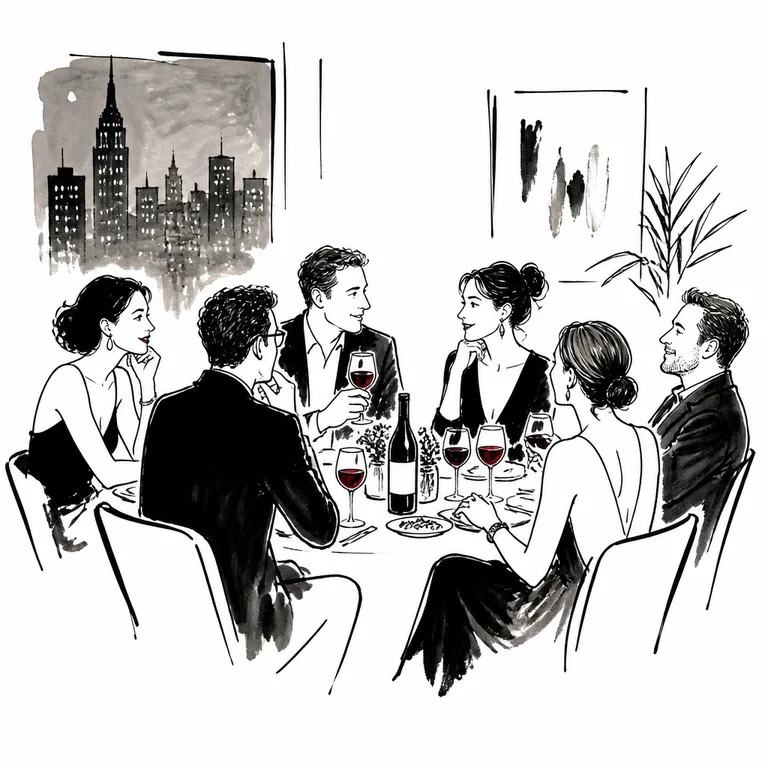
New Yorker Editorial Ink
The New Yorker has run editorial illustration and cartoons in a coherent visual language for nearly a century. The style is not one artis…
Open style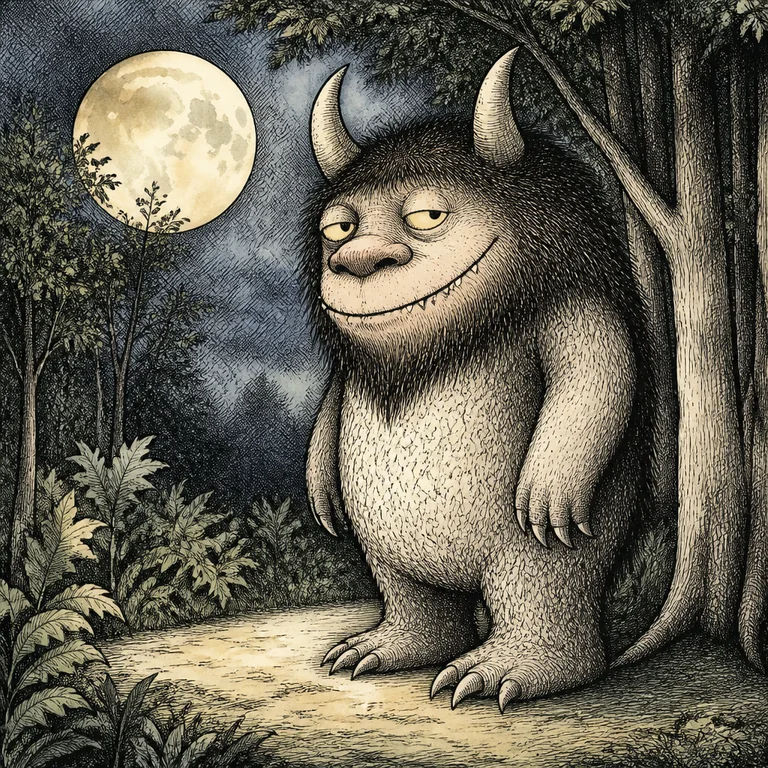
Maurice Sendak Crosshatch
Maurice Sendak's mature style — Where the Wild Things Are (1963), In the Night Kitchen (1970), Outside Over There (1981) — is built on de…
Open style