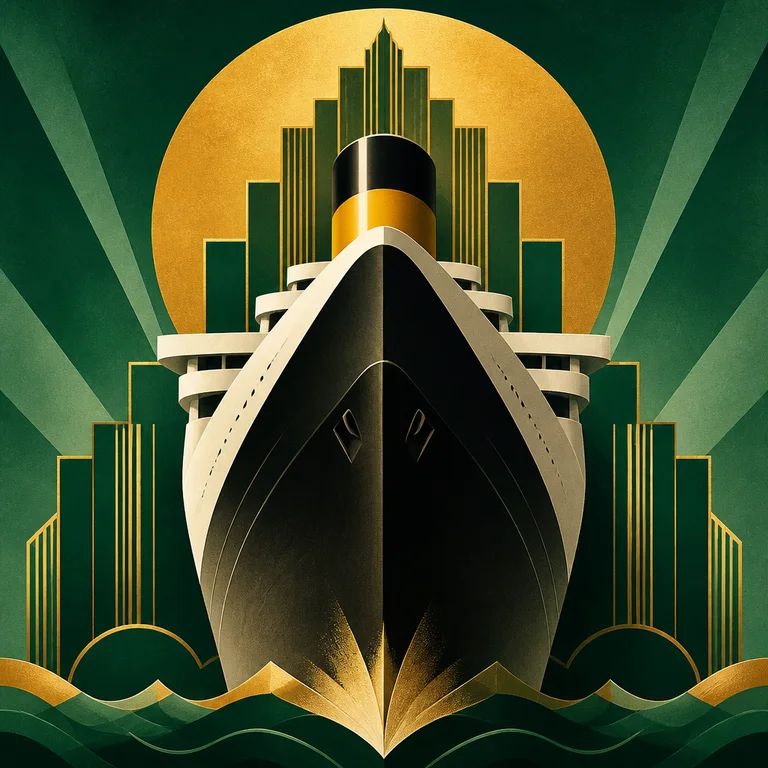
Description
Art Deco poster design — roughly 1910 to 1940, peaking in Paris between the 1925 Exposition Internationale and the early 1930s — has a visual vocabulary that has not aged because it was built around glamor and machine-age confidence at once. Rules: geometric stylization of natural forms (a leopard becomes a series of arcs); strong vertical compositions with mirrored symmetry along the y-axis or stepped/ziggurat horizontal banding; bold flat color blocks with metallic accents (gold, silver, copper) printed by stone lithography; speed lines and streamlining on subjects that move (trains, ocean liners, aircraft); custom geometric display typography aligned with the imagery's stepped forms; rich saturated palettes — emerald, ruby, sapphire, with cream or black grounds. Use it for travel posters, luxury brand work, theatrical and concert posters, period-feel editorial, jewelry and fashion campaigns, and anything that should feel 1920s–30s elegant and aspirational. Limitations: not for soft, photoreal, or anti-luxury aesthetics. Models default to either generic "art nouveau" (different period) or "gatsby cliché." Specify "Art Deco poster, geometric stylization, stepped ziggurat composition, custom geometric display typography, metallic gold accents on saturated emerald or ruby, A.M. Cassandre lineage."
Three pioneers
Every style in this catalog names three verifiable pioneers. This is the part of the drop test that takes the longest to write and is the easiest to spot when it's missing.
-
A.M. Cassandre (Adolphe Mouron)
Ukrainian-born French poster designer, 1901–1968. Posters for the Étoile du Nord train (1927), the Normandie ocean liner (1935), and Dubonnet (1932) are the canonical Art Deco poster designs. Designed the Peignot typeface.
-
Jean Carlu
French poster designer, 1900–1997. WWII war-effort posters (America's Answer! Production, 1941) and his interwar advertising work for Monsavon and Larousse defined the modernist-leaning side of Art Deco poster design.
-
Erté (Romain de Tirtoff)
Russian-born French designer, 1892–1990. Cover illustrator for Harper's Bazaar 1915–1937. His elongated stylized figures and ornate metallic compositions are the fashion-glamor side of the Deco poster tradition.
Contemporary revival
Baz Luhrmann's The Great Gatsby (2013) and its sustained merchandising tail, the persistent 'Gatsby aesthetic' in event design and fashion (2013–present), and the wholesale Art Deco visual language in HBO's Boardwalk Empire (2010–2014) and Netflix's Babylon Berlin (2017–2025)
Babylon Berlin became Sky/Netflix's most expensive German production and ran four seasons through 2025, keeping Weimar-Deco aesthetics in active visual culture. #artdeco on Instagram exceeds 4M posts; #gatsby exceeds 5M. The 'Gatsby party' has become a standard event template — Pinterest reports it as a top-10 perennial event search. The 2025 reopenings of Art Deco-era cinemas in London and Los Angeles (Egyptian, Academy Museum tie-ins) kept the style in design press.
Working prompts
Three prompts we've tested against current FairStack models. Copy and run.
-
Art Deco travel poster, ocean liner viewed head-on, geometric stylization, stepped ziggurat composition, metallic gold accents on saturated emerald background, custom geometric sans-serif display typography reading NORMANDIE, A.M. Cassandre style
-
1925 Paris exposition poster, stylized leopard reduced to geometric arcs, mirrored vertical composition, ruby red and gold on cream ground, custom geometric typography
-
Art Deco theatrical poster, elongated female figure in stylized geometric gown, gold and emerald palette, stepped architectural border, Erté lineage
Recommended models
Models from FairStack's catalog that handle this style best. Sorted by price.
Related styles
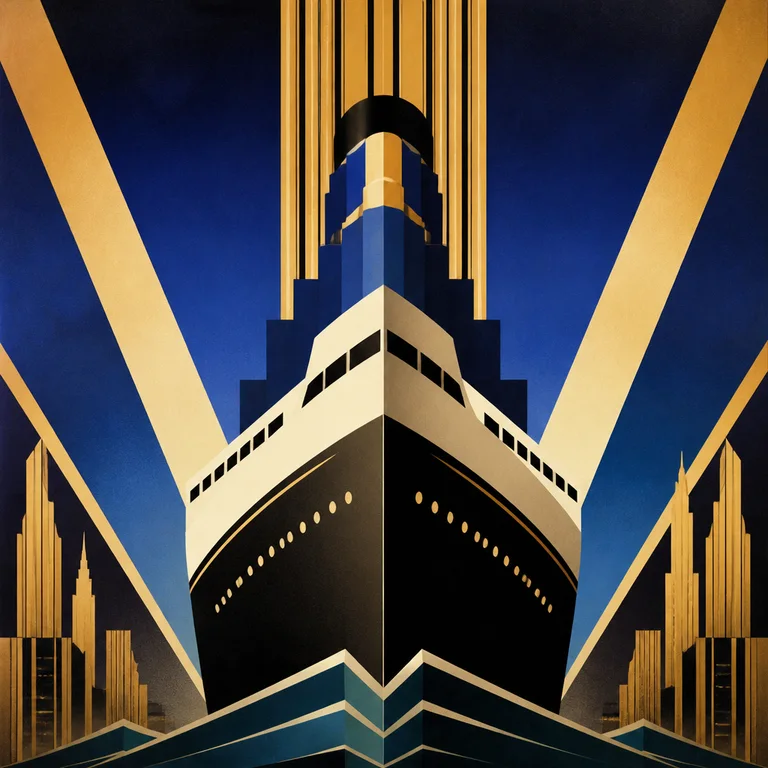
1920s Art Deco
Art Deco was the dominant decorative style from roughly 1920 to 1939, born at the 1925 Paris Exposition Internationale des Arts Décoratif…
Open style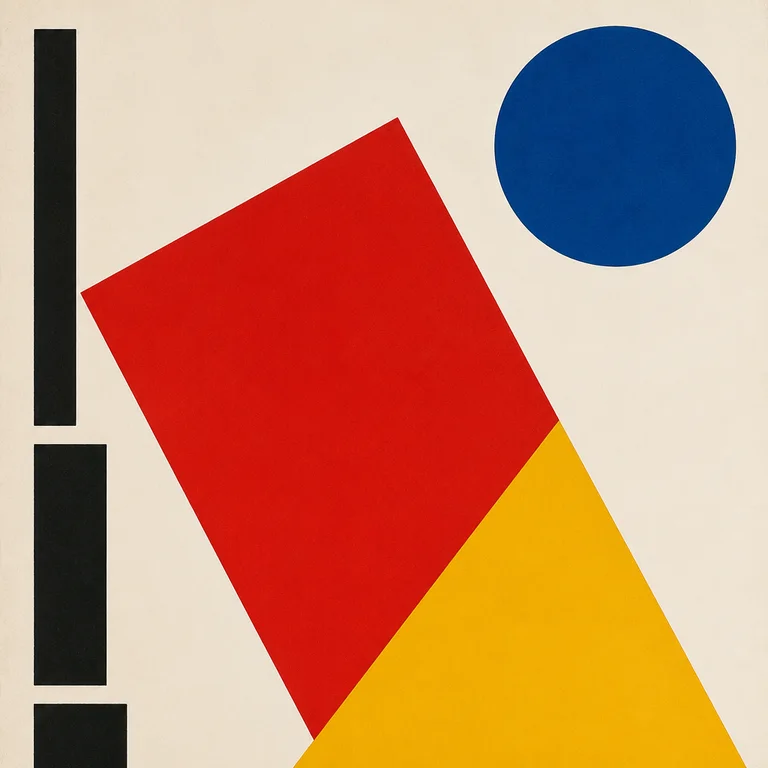
Bauhaus
The Bauhaus school operated for fourteen years (1919–1933) in three German cities before the Nazis shut it down — but the visual grammar…
Open style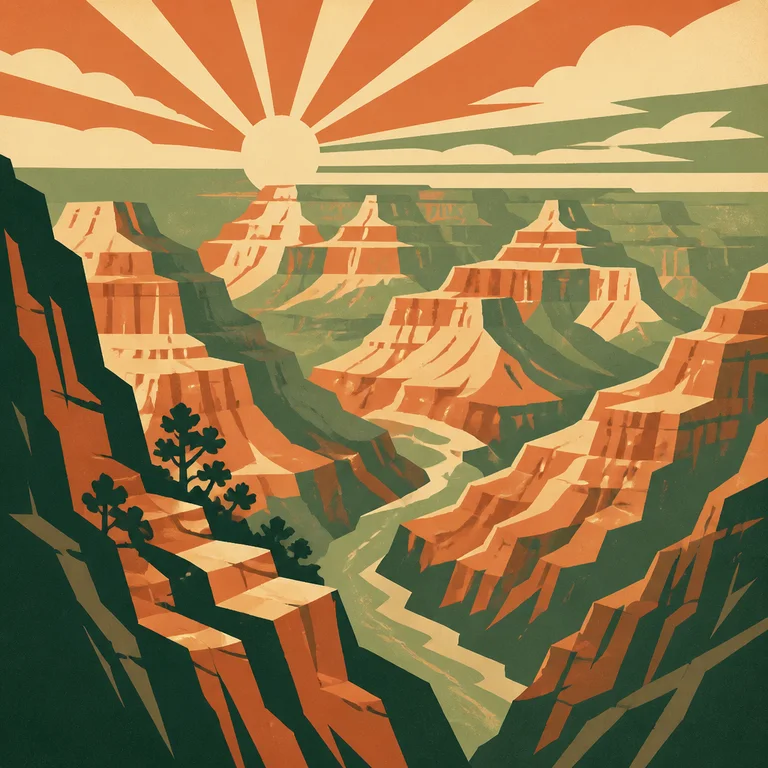
WPA Travel Poster
Between 1936 and 1943 the Works Progress Administration's Federal Art Project produced over 2,000 silkscreened posters to promote nationa…
Open style
Saul Bass Title Card
Saul Bass (1920–1996) redefined what film title sequences could be — he made them part of the film, not a list of names to skip — and the…
Open style