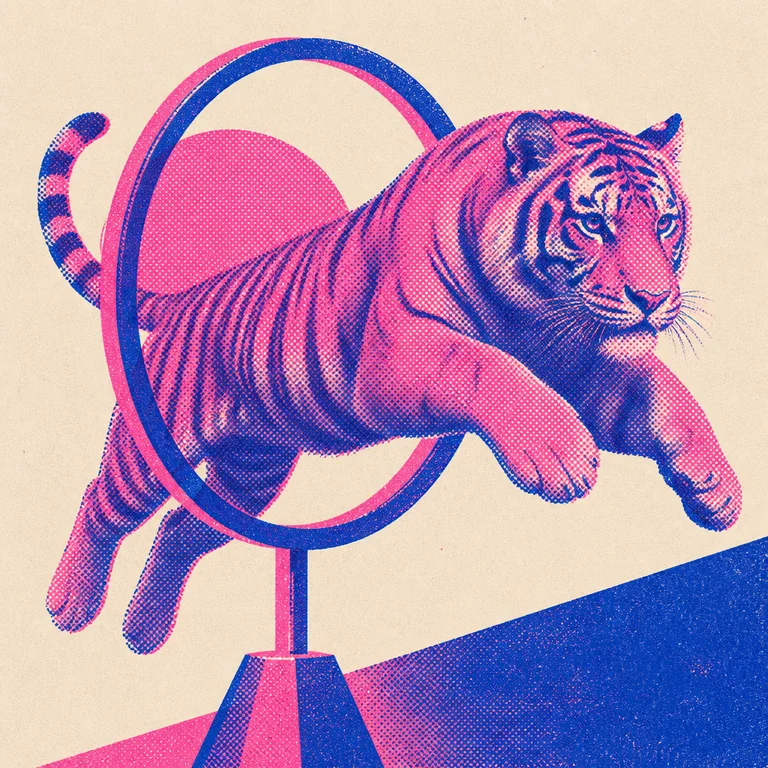
Description
Risograph is a Japanese stencil-duplication printing technology (Riso Kagaku, since 1986) that was originally designed for cheap school newsletters and has become, since roughly 2010, the dominant printing process for independent zine, art-book, and small-edition poster work in Brooklyn, Berlin, Tokyo, and London. The visual rules come from the machine. Risograph prints one ink at a time using soy-based fluorescent or pastel inks; registration between layers is loose, producing visible offsets; the inks themselves do not mix cleanly — overlaps produce a third color through screened halftone overlap, not blending; large solid color areas show grain and roller streaks; and the palette is limited to roughly 15 stock spot inks (fluorescent pink, federal blue, sunflower, teal, etc.). Use it for zines, gig posters, small-edition art prints, indie editorial illustration, graphic-novel pages, and any image that should feel hand-made and printed-not-screened. Limitations: not photoreal, never. Color reproduction is unpredictable. Generative models will sometimes give you generic textured illustration; specify "Risograph print, two-layer with visible misregistration, fluorescent pink and federal blue, halftone overlap, grainy ink texture on uncoated paper."
Three pioneers
Every style in this catalog names three verifiable pioneers. This is the part of the drop test that takes the longest to write and is the easiest to spot when it's missing.
-
Riso Kagaku Corporation
Japanese company that invented and continues to manufacture the Risograph duplicator (RA series 1986, RZ 2000, GR series). Not an artist, but the entire visual language is defined by the limits of their machines.
-
Mark Pawson
British artist who has used Risograph for zine printing since the 1980s; widely credited as one of the earliest fine-art practitioners. Mr A Moves in Mysterious Ways (1995) is a canonical reference.
-
Hato Press (London) and Colorama (Berlin)
Independent print studios that turned Risograph into a recognized fine-art and editorial medium from roughly 2010 onward.
Contemporary revival
The post-2015 explosion of Risograph studios globally — there are now hundreds — and the look's adoption in mainstream editorial design (Tate, MoMA, The Guardian Weekend, indie album covers)
The number of Risograph studios listed on the global Stencil.wiki directory grew from roughly 50 in 2015 to over 600 in 2024. Major institutions — MoMA Design Store, V&A, Tate Britain — sell Risograph prints in shops. #risograph on Instagram exceeds 700K posts.
Working prompts
Three prompts we've tested against current FairStack models. Copy and run.
-
two-color Risograph print, fluorescent pink and federal blue, illustrated tiger jumping through hoop, visible misregistration between layers, halftone overlap producing purple, grainy ink texture on cream uncoated paper
-
Risograph gig poster, three colors (teal, sunflower, black), bold sans-serif type, simplified portrait of musician, halftone shading, visible roller streaks
-
Risograph zine page, two-color (federal blue and orange), cartoon city block with simplified buildings, hand-drawn line over flat color, misregistered
Recommended models
Models from FairStack's catalog that handle this style best. Sorted by price.
Related styles
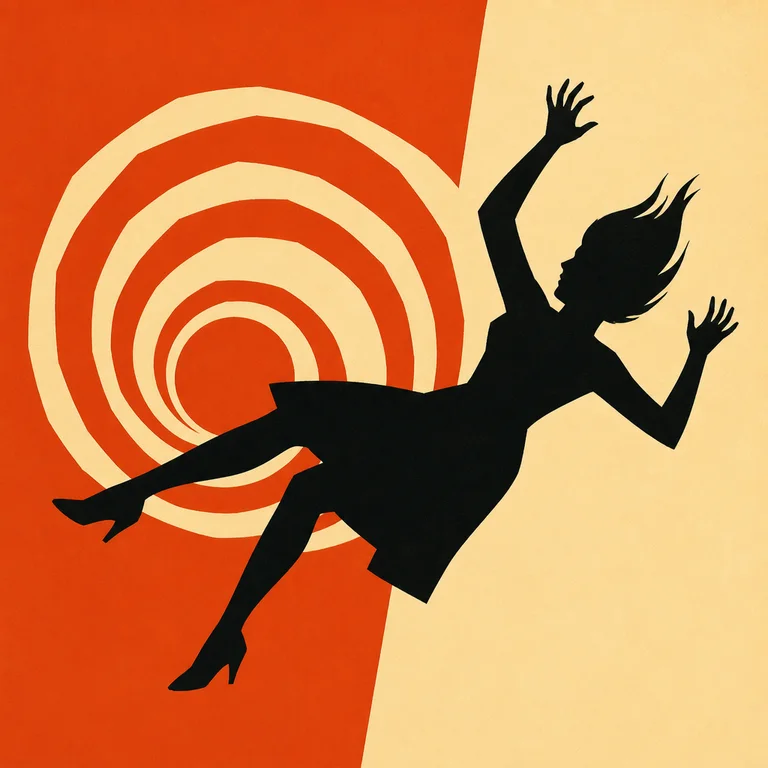
Saul Bass Title Card
Saul Bass (1920–1996) redefined what film title sequences could be — he made them part of the film, not a list of names to skip — and the…
Open style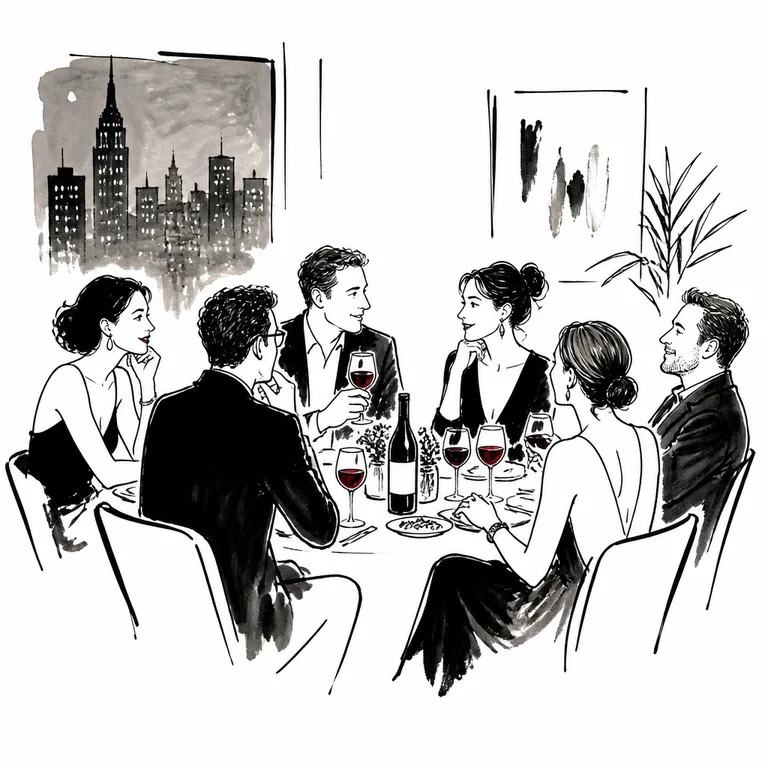
New Yorker Editorial Ink
The New Yorker has run editorial illustration and cartoons in a coherent visual language for nearly a century. The style is not one artis…
Open style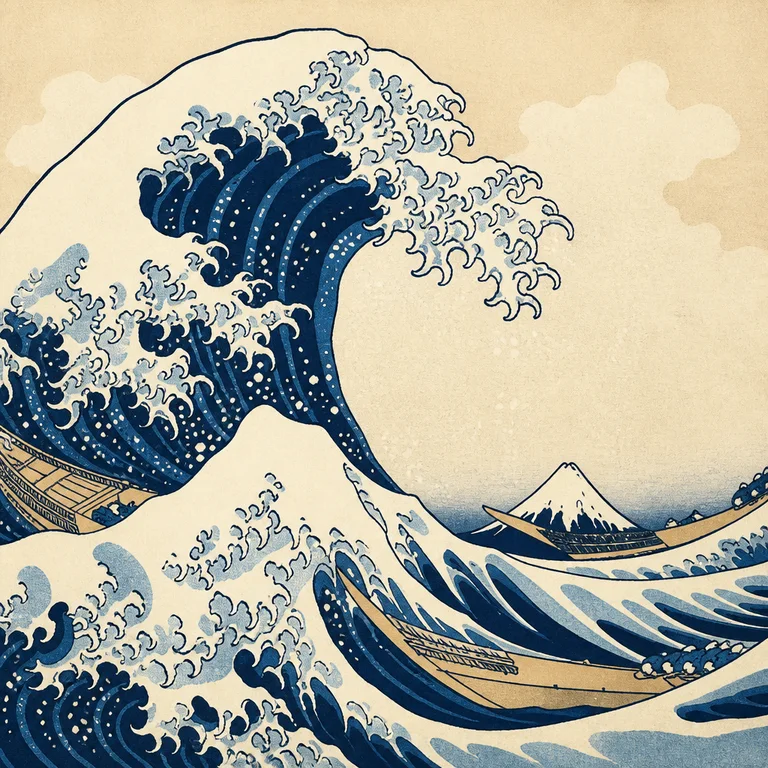
Ukiyo-e Woodblock
Ukiyo-e — "pictures of the floating world" — is the dominant Japanese print tradition from roughly 1660 to 1900. The images were carved i…
Open style