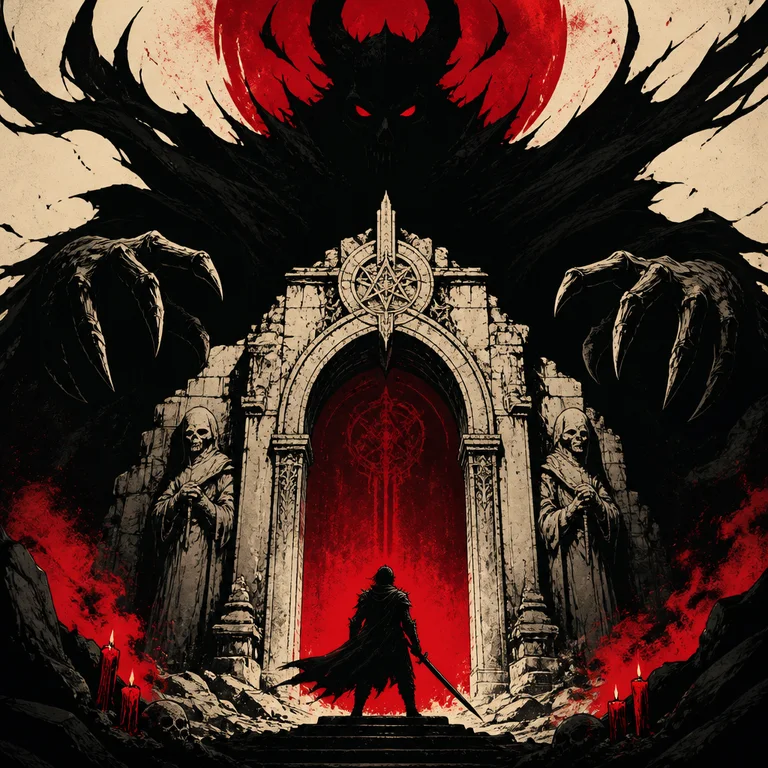
Description
Mike Mignola's work on Hellboy (1994–present) and B.P.R.D. defined a recognizable, severely simplified, high-contrast comic-art idiom — and his style is the most explicit modern revival of Lynd Ward's 1930s woodcut novels and the German Expressionist printmakers. Visual rules: massive areas of pure black ink anchoring every panel; spotted blacks chosen for compositional rhythm rather than realism — Mignola fills shadows with shape, not gradient; simplified, geometric figures with chunky proportions; minimal hatching, replaced almost entirely by silhouette and negative space; flat, restrained color palettes — Dave Stewart's color work for Hellboy uses 3–4 colors per panel, often warm against cold; backgrounds reduced to suggested architecture and silhouetted environment shapes; lettering set in rectangular caption boxes integrated as compositional blocks. Use it for horror, occult, pulp adventure, gothic mood, graphic-novel-style storytelling, and any image that should feel weighty and supernatural. Limitations: not for soft, photoreal, or detailed. Models will give you generic "dark comic" — specify "Mike Mignola style, massive spotted blacks as compositional rhythm, simplified chunky figures, no hatching, flat restrained 3-color palette by Dave Stewart, silhouetted gothic architecture, Lynd Ward woodcut lineage."
Three pioneers
Every style in this catalog names three verifiable pioneers. This is the part of the drop test that takes the longest to write and is the easiest to spot when it's missing.
-
Mike Mignola
American comics artist, born 1960. Created Hellboy in 1994; the franchise has sustained 30+ years of comics, three theatrical films (2004, 2008, 2019), and a 2024 reboot. Drew Hellboy himself for the first decade; the visual style is wholly his.
-
Lynd Ward
American woodblock artist, 1905–1985. Gods' Man (1929) and five subsequent woodcut novels invented the wordless graphic novel and established the high-contrast spotted-black visual vocabulary that Mignola consciously revived.
-
Jack Kirby
Mignola has named Kirby as a primary influence — the chunky proportions, simplified architectural forms, and 'Kirby crackle' energy effects appear in Mignola's work, reinterpreted through Ward's woodcut high-contrast logic.
Contemporary revival
Hellboy: The Crooked Man (2024), the 30th-anniversary Hellboy programming at Dark Horse Comics, and the continuing visual influence on contemporary comic artists including Becky Cloonan, Rafael Albuquerque, and Sean Murphy
Hellboy: The Crooked Man (2024) was the fourth Hellboy theatrical film. Dark Horse's 30th anniversary Hellboy hardcover (2024) was its bestselling event collection. The Hellboy Omnibus volumes have stayed in print continuously since 2008; the Library Edition hardcovers (16 volumes through 2024) routinely top graphic-novel sales charts. #mikemignola on Instagram exceeds 110K posts. Crooked Man director Brian Taylor specifically praised Mignola's visual influence on the film's design in 2024 press.
Working prompts
Three prompts we've tested against current FairStack models. Copy and run.
-
Mike Mignola-style comic panel, occult investigator in trench coat standing in haunted ruined chapel, massive spotted black ink filling background, simplified chunky figure, no hatching, flat 3-color palette of warm orange and cold blue and cream, silhouetted gothic architecture, Dave Stewart colors
-
Hellboy-style high-contrast comic art, demon creature emerging from collapsed Victorian building, severe spotted blacks as compositional rhythm, restrained palette, no rendering, woodcut-influenced design
-
Lynd Ward-meets-Mignola horror comic page, lone figure with lantern in expressionist woodcut-style cemetery, massive black masses, simplified angular forms, minimal color
Recommended models
Models from FairStack's catalog that handle this style best. Sorted by price.
Related styles
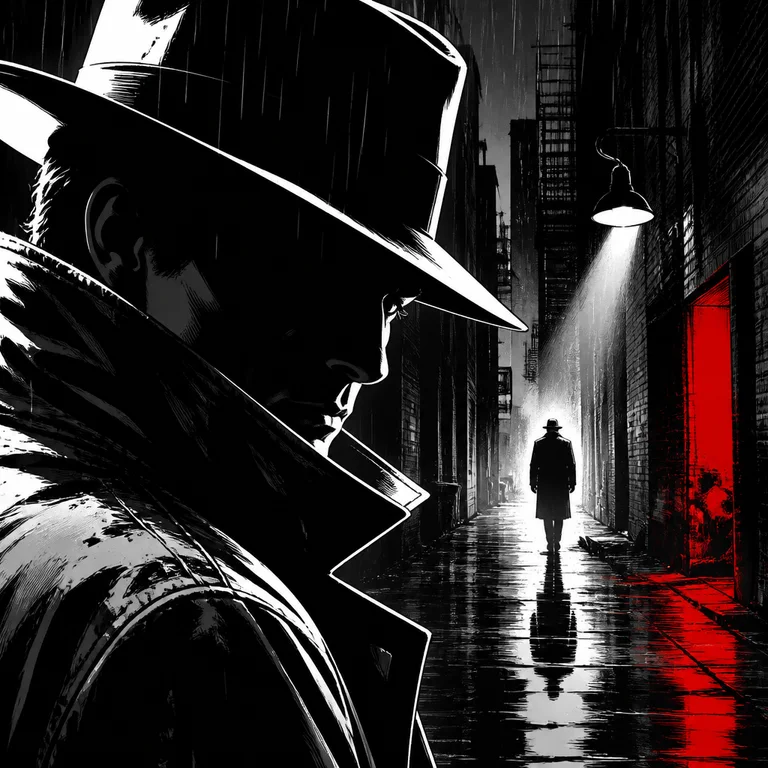
Frank Miller Sin City
Frank Miller's Sin City (1991–present at Dark Horse) is the most influential black-and-white American comic of the post-1990 era. The vis…
Open style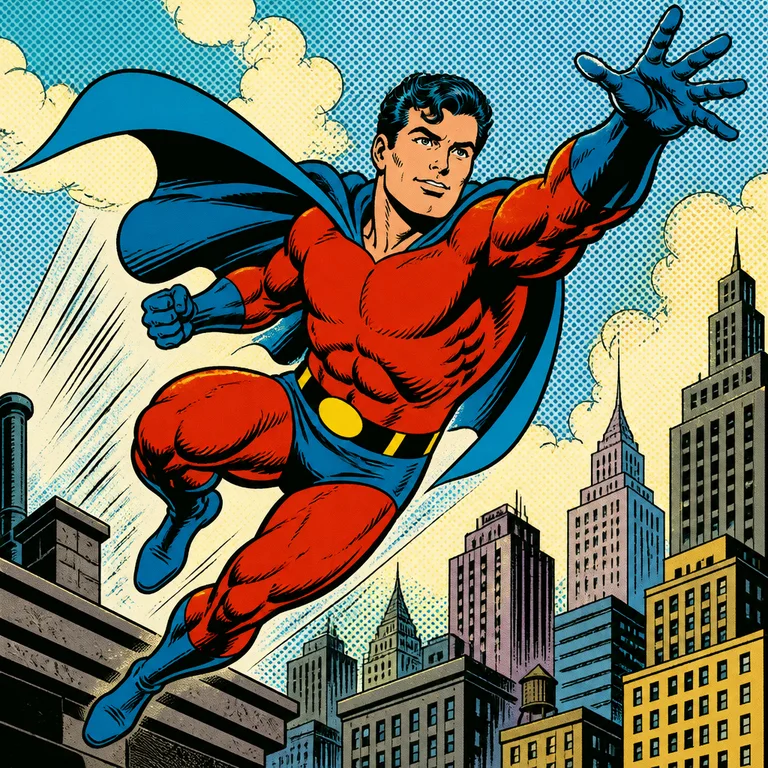
Silver Age Superhero
The Silver Age of American superhero comics runs from roughly 1956 (DC's revival of The Flash in Showcase #4) to about 1970. The visual g…
Open style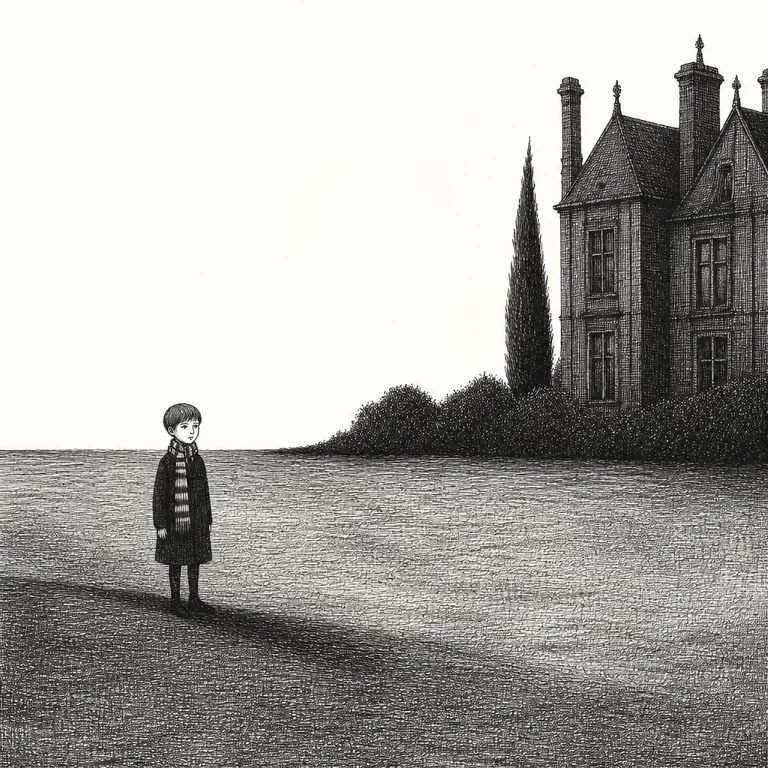
Edward Gorey Crosshatched Gothic
Edward Gorey produced more than 100 small books between 1953 and his death in 2000, each one set in a faintly Edwardian elsewhere and ren…
Open style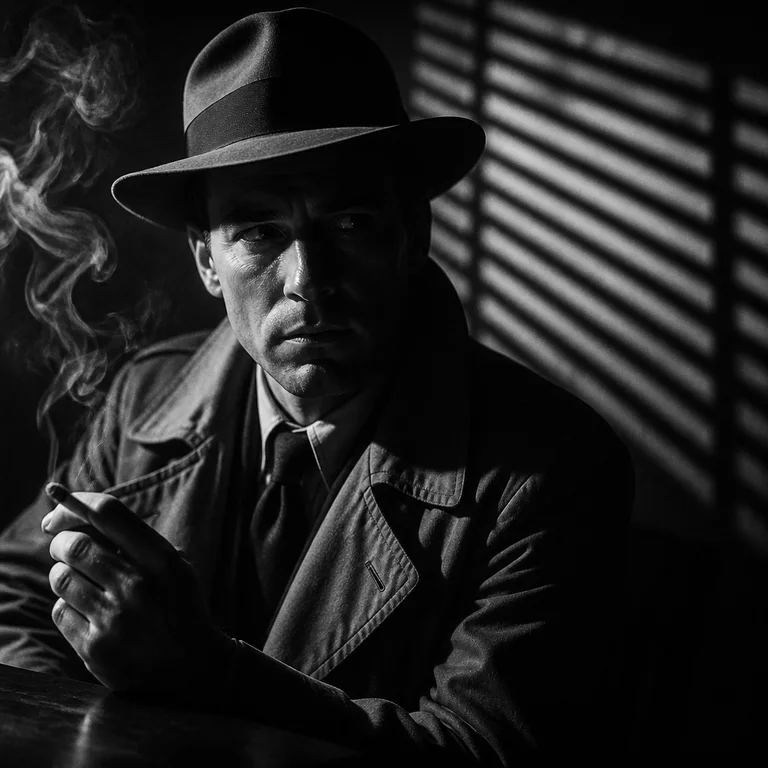
Film Noir
Film noir is not just "black and white." It is a specific photographic grammar built in 1940s Hollywood out of three constraints — German…
Open style