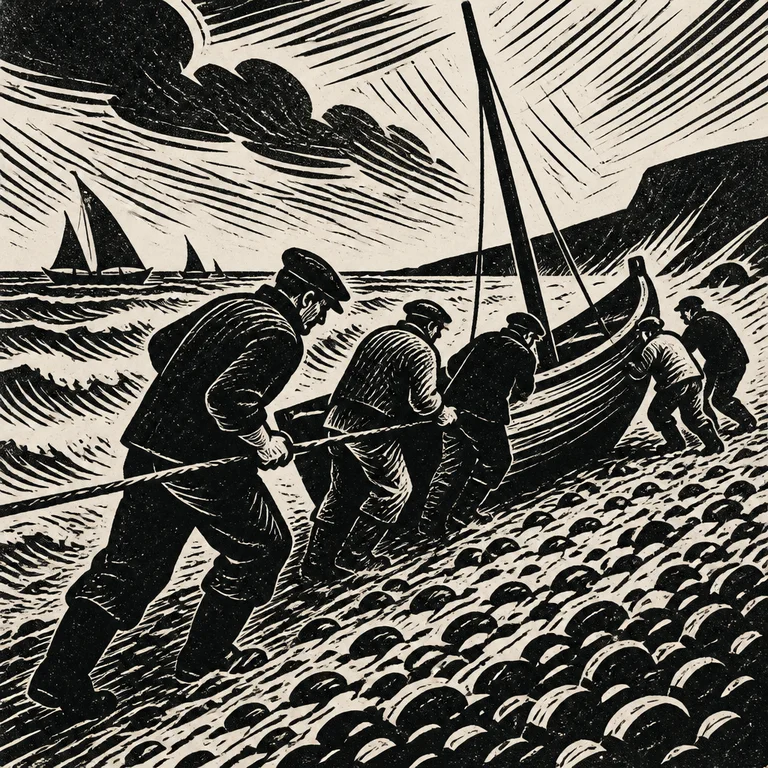
Description
Linocut relief print is the look of an image cut into linoleum, inked, and pressed onto paper — a reductive medium where everything you see is what was left standing after the rest was carved away. It is a printmaking aesthetic, not a digital filter, and its constraints are the whole point: you cannot do fine gradients, so the artist builds tone from cut marks. Visual rules: bold, confident shapes with no soft edges; the white of the paper doing as much work as the ink; visible gouge marks — the angular, directional carving texture in shadow areas and skies that signals the hand of the tool; limited colour, either single-block black or a small number of registered colour layers (reduction printing); slight ink-coverage irregularity and a faint embossed plate impression; strong rhythmic patterning used for water, fields, smoke, and machinery; flattened, near-poster composition because the medium rewards graphic clarity over depth. Use it for book and poster work, packaging and signage that wants a craft mark, folk and pastoral subjects, bold portraits, and any image that should feel physically made. It does not do photorealism, smooth gradients, or fine detail at small scale — push detail too far and it stops looking like a print. Models smooth it into clean vector. Specify "linocut relief print, bold flat shapes, visible directional gouge marks, paper-white doing the work, limited registered colour, rhythmic carved patterning, slight ink irregularity, hand-pressed."
Three pioneers
Every style in this catalog names three verifiable pioneers. This is the part of the drop test that takes the longest to write and is the easiest to spot when it's missing.
-
Sybil Andrews
British-Canadian printmaker, 1898–1992. A leading figure of the Grosvenor School of Modern Art; her dynamic Futurist-inflected linocuts of labour and movement — notably Bringing in the Boat (1933) and Speedway (1934) — set the standard for rhythm and motion in the medium.
-
Edward Bawden
British artist, 1903–1989. Master of the linocut as a printmaking and book-illustration tool; his large architectural and pastoral linocuts (Brighton Pier, the Aesop's Fables series) showed the medium handling complex scenes with controlled pattern.
-
Angie Lewin
British printmaker, born 1963. The leading contemporary linocut and wood-engraving artist, represented by and central to St Jude's Prints and St Jude's Gallery in Norfolk; her plant-and-landscape relief prints carry the Grosvenor and Ravilious lineage into the present commercial market.
Contemporary revival
The documented printmaking renaissance — the #linocut Instagram community, bestselling linocut how-to books, and the St Jude's / Grosvenor School market
Linocut is the standout case of an analogue craft revived by digital communities: #linocut on Instagram exceeds 2M posts and the hashtag is a primary discovery channel for working printmakers selling editions. Laura Boswell's and Nick Morley's (Linocut Boy) instructional books are perennial bestsellers in Amazon's printmaking category, and the medium is a fixture of UK adult-education and maker programmes. St Jude's Prints (founders Simon Lewin and Angie Lewin) has built a sustained commercial market for contemporary relief printmakers and exhibits the historic Grosvenor School artists alongside them. Sybil Andrews and the Grosvenor School linocuts have set repeated auction records at Christie's and Bonhams since the touring Cutting Edge: Modernist British Printmaking exhibition (Dulwich Picture Gallery, 2019), which reframed the medium as collectable modernism.
Working prompts
Three prompts we've tested against current FairStack models. Copy and run.
-
Linocut relief print of fishermen hauling a boat up a shingle beach, bold flat black shapes against paper white, visible directional gouge marks in the sky and water, rhythmic carved patterning for the surf, slight ink-coverage irregularity, Grosvenor School dynamism, hand-pressed
-
Reduction linocut landscape, rolling fields and a single tree in three registered colours, limited palette, strong rhythmic pattern in the hills, faint plate emboss, St Jude's contemporary craft feel
-
Single-block black linocut portrait, bold confident shapes, white paper doing the modelling, angular tool marks in the shadows, poster-flat composition, physically made
Recommended models
Models from FairStack's catalog that handle this style best. Sorted by price.
Related styles
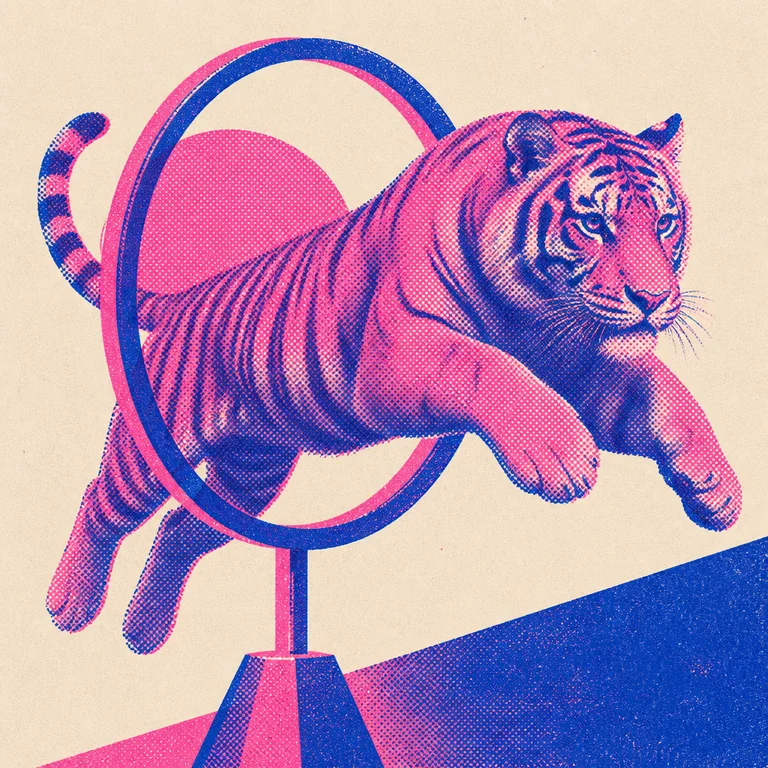
Risograph
Risograph is a Japanese stencil-duplication printing technology (Riso Kagaku, since 1986) that was originally designed for cheap school n…
Open style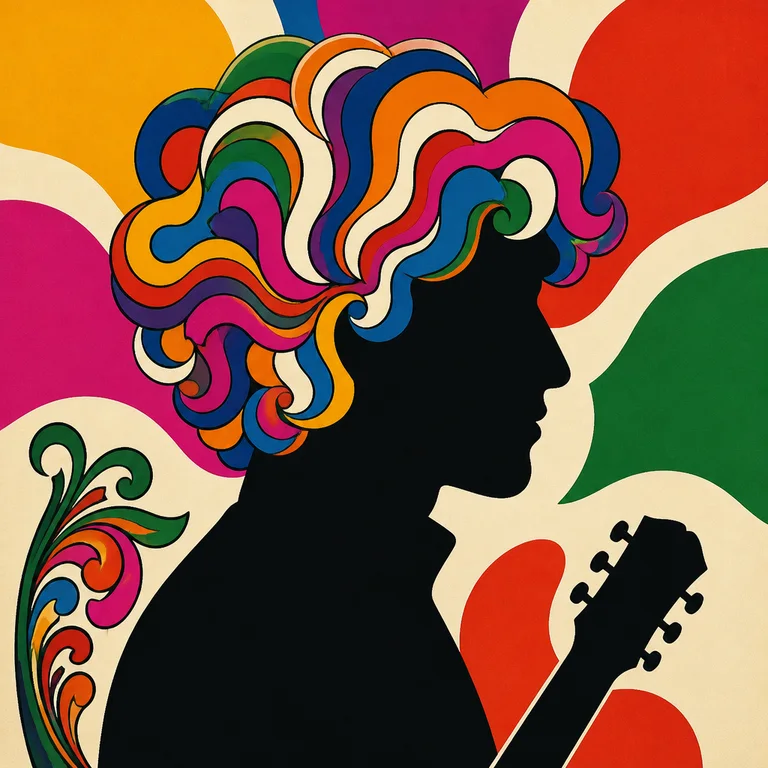
Milton Glaser Pop
Milton Glaser Pop is the warm, eclectic, idea-first American graphic illustration that came out of Push Pin Studios from 1954 onward — th…
Open style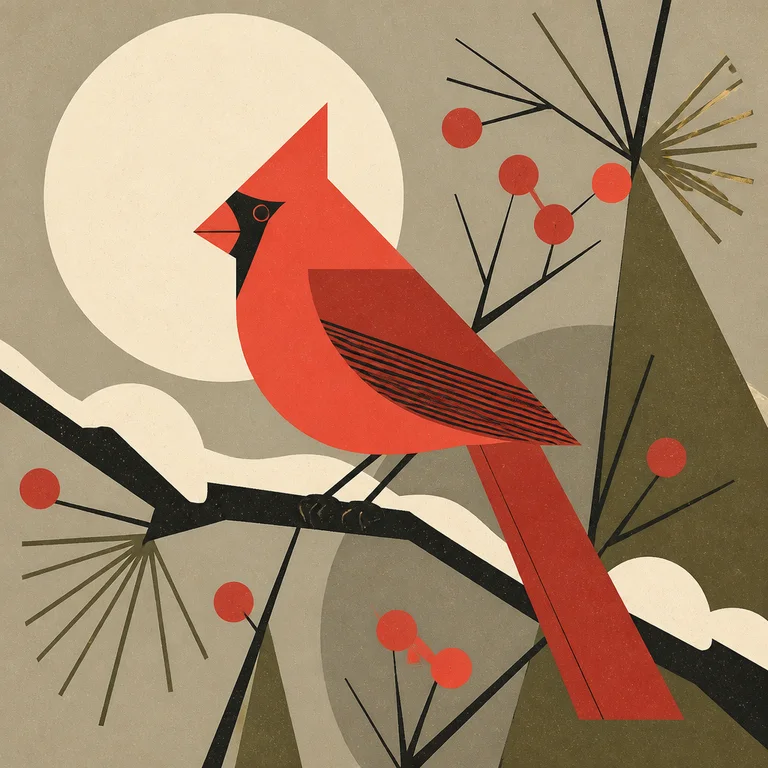
Mid-Century Graphic Illustration
Mid-Century Graphic Illustration is the flat, witty, geometry-driven American commercial illustration of roughly 1948–1965 — the look of…
Open style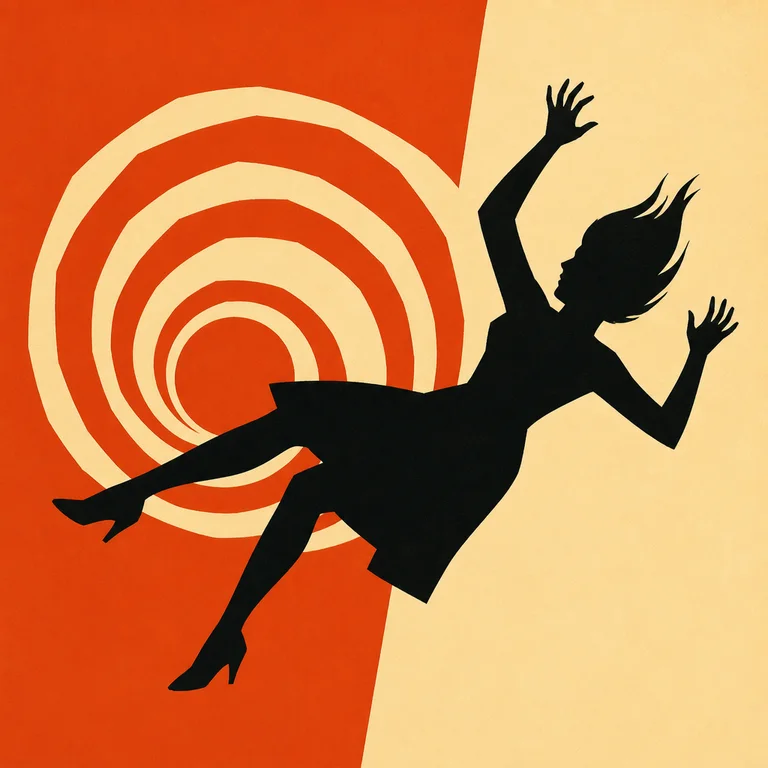
Saul Bass Title Card
Saul Bass (1920–1996) redefined what film title sequences could be — he made them part of the film, not a list of names to skip — and the…
Open style