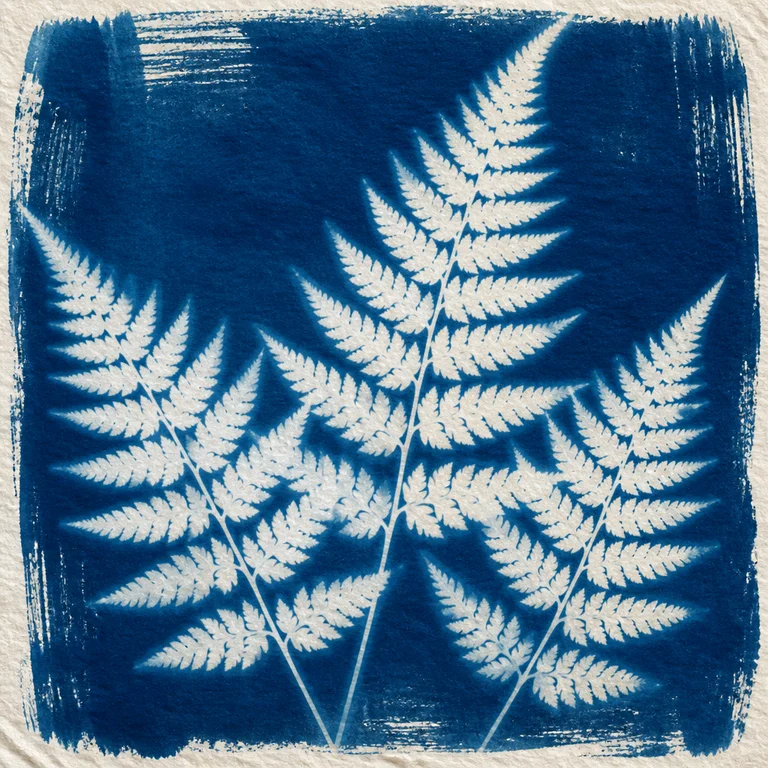
Description
The cyanotype process was invented by Sir John Herschel in 1842 and used almost immediately by the botanist Anna Atkins to produce Photographs of British Algae (1843) — the first photographically illustrated book in history. The process is iron-based, not silver, so it sits outside the mainstream photographic lineage. It prints in Prussian blue, requires only sunlight to expose, and washes out in water. Architects used it for blueprints (the name "blueprint" comes from the cyanotype). Contemporary photographers, printmakers, and textile artists have revived it as a hand-process medium. Visual rules: a single distinctive Prussian-blue tone with white highlights; no mid-tone range like silver gelatin — contrast is steep, often almost two-tone; objects placed directly on coated paper produce photograms with crisp silhouette edges and soft penumbral halos; sunlight exposure (5–30 minutes typical) means UV-rich light is part of the look; paper texture is always visible because the chemistry coats absorbent fiber; staining, fingerprints, and water-development irregularities are characteristic, not flaws. Use it for botanical and natural-history imagery, textile and pattern design, hand-made book and zine work, scientific-illustration callbacks, and any image that should feel like a physical specimen rather than a photograph. Generative models will give you "blue-tinted photo." Specify "cyanotype photogram on cotton-rag paper, Prussian blue single tone, white highlights, steep contrast almost two-tone, crisp silhouette edges with soft penumbral halo, visible paper fiber texture, hand-coated brush marks at edges, sun-exposed."
Three pioneers
Every style in this catalog names three verifiable pioneers. This is the part of the drop test that takes the longest to write and is the easiest to spot when it's missing.
-
Sir John Herschel
British scientist, 1792–1871. Invented the cyanotype process and published it in 1842. Also coined the words 'photography,' 'positive,' and 'negative.' Friend of William Henry Fox Talbot and Anna Atkins.
-
Anna Atkins
British botanist, 1799–1871. Photographs of British Algae: Cyanotype Impressions (1843–53) is the first book to be illustrated and printed entirely with photographic images. She self-published twelve copies; she is widely considered the first female photographer.
-
Bertha E. Jaques
American printmaker and botanical artist, 1863–1941. Founded the Chicago Society of Etchers (1910). Her early-twentieth-century botanical cyanotypes preserved the process as a working artist's medium through the period when commercial photography ignored it.
Contemporary revival
The 2018 New York Public Library exhibition Anna Atkins Refracted (which traveled and was widely covered), the rise of cyanotype as a top-tier 'analog process' craft genre on Etsy and Instagram, and the persistent textile-design revival in fashion and home goods (2020–present)
The NYPL's Anna Atkins exhibition was extended due to demand and toured to multiple venues. Cyanotype workshops at Penumbra Foundation, Photographers' Formulary, and Bostick & Sullivan run continuously sold-out. Etsy lists over 70,000 cyanotype prints and tutorial kits with consistent sales velocity. #cyanotype on Instagram exceeds 800K posts. Designer Christy Dawn's 2022 cyanotype-printed dress collection and multiple Anthropologie cyanotype home-textile lines have kept the look in retail. Jaipur Living, Loloi, and West Elm have all carried cyanotype-pattern textiles. Workshops at Penland and Haystack schools are typically waitlisted years out.
Working prompts
Three prompts we've tested against current FairStack models. Copy and run.
-
cyanotype photogram of fern fronds on cotton-rag paper, Prussian blue single tone, white silhouette of leaves with soft penumbral halo at edges, steep contrast almost two-tone, visible paper fiber texture, hand-coated brush marks at margins, sun-exposed analog process
-
Anna Atkins-style botanical cyanotype, three different algae specimens arranged on hand-coated paper, deep Prussian blue with white silhouettes, 1843 scientific specimen aesthetic
-
modern cyanotype textile pattern, abstract botanical shapes in white on Prussian blue ground, water-development staining at edges, hand-process irregularities, contemporary craft revival
Recommended models
Models from FairStack's catalog that handle this style best. Sorted by price.
Related styles
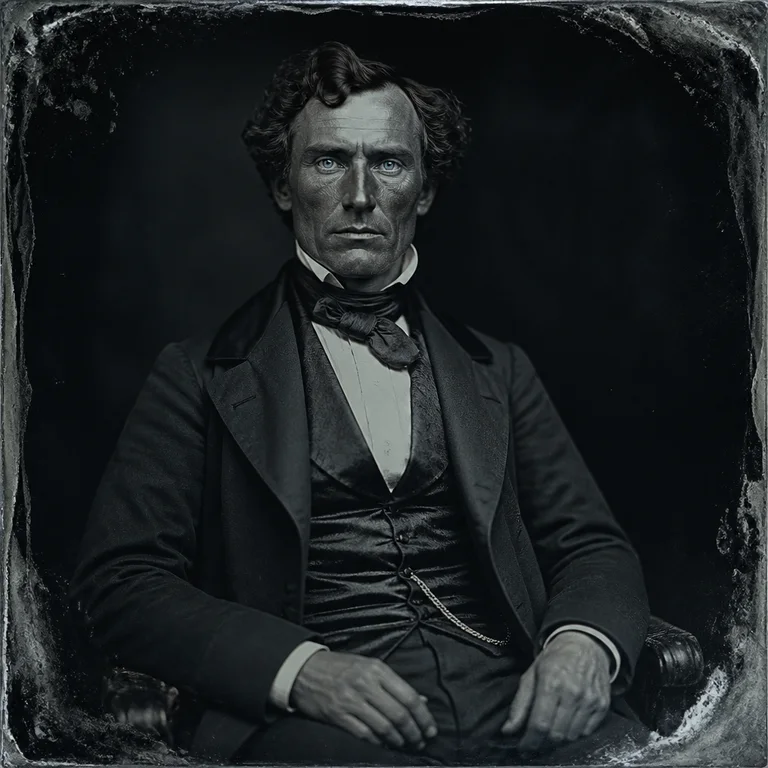
Tintype / Wet Plate
The wet-plate collodion process was invented by Frederick Scott Archer in 1851 and was the dominant photographic process from roughly 185…
Open style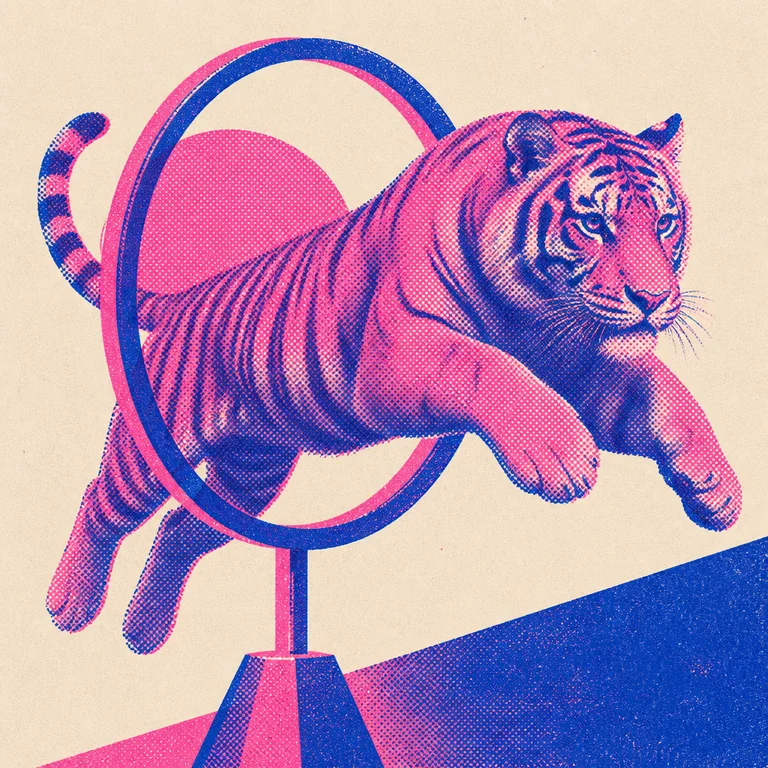
Risograph
Risograph is a Japanese stencil-duplication printing technology (Riso Kagaku, since 1986) that was originally designed for cheap school n…
Open style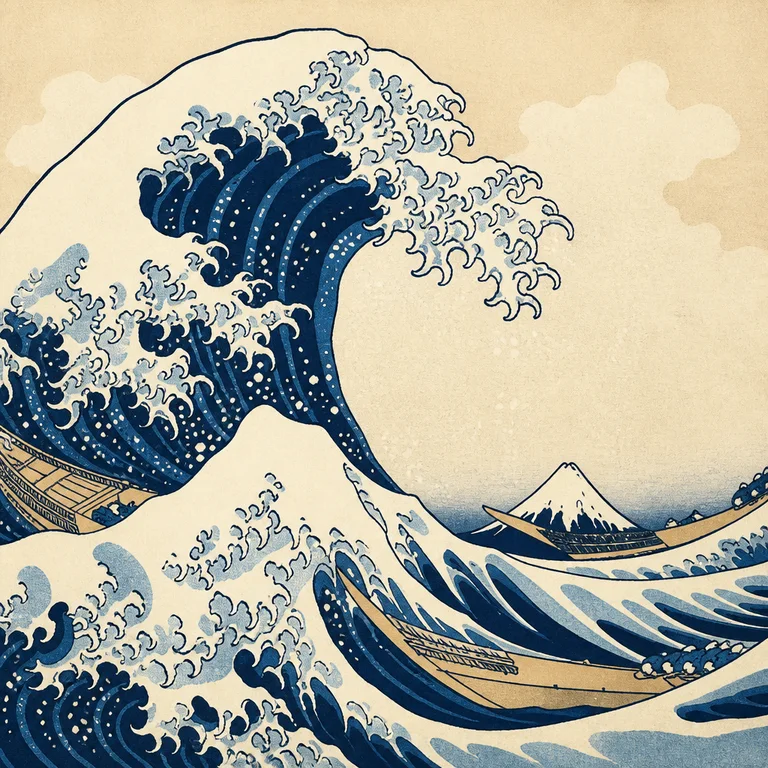
Ukiyo-e Woodblock
Ukiyo-e — "pictures of the floating world" — is the dominant Japanese print tradition from roughly 1660 to 1900. The images were carved i…
Open style
Lo-Fi Zine / Cut-and-Paste
The lo-fi zine aesthetic — photocopied, hand-assembled, deliberately rough printed matter — emerged from the late-1970s punk scene (Sniff…
Open style