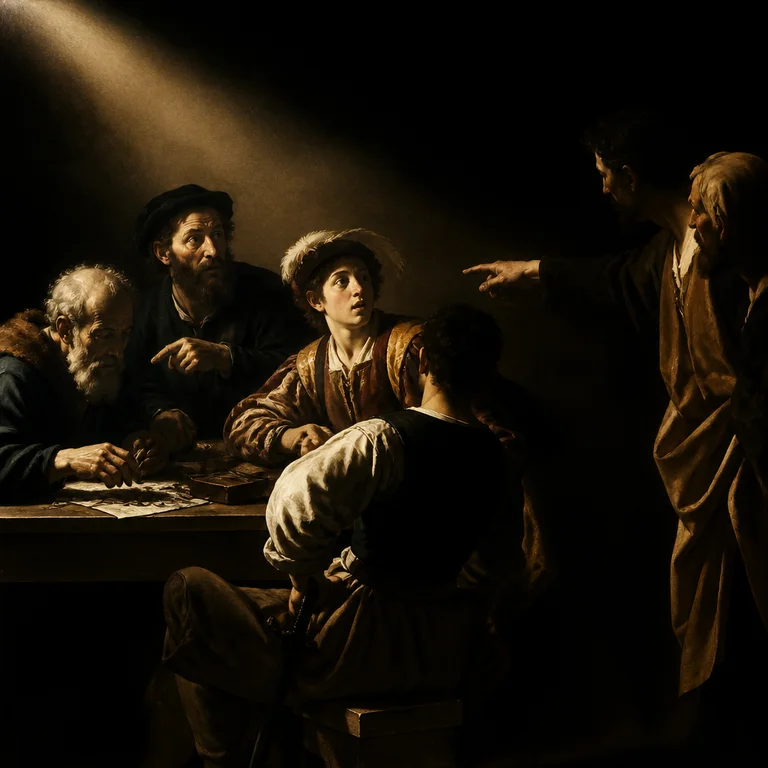
Description
Chiaroscuro — literally "light-dark" in Italian — names the late-Renaissance and Baroque practice of modeling figures with strong contrast between illuminated and shadowed planes, often with a single dominant light source that leaves much of the canvas in deep shadow. Leonardo da Vinci introduced the systematic approach in the 1480s; Caravaggio took it to an extreme in Rome around 1600 with what is now called tenebrism — a near-black background pierced by a hard directional light. Rembrandt and Georges de La Tour each developed distinct variants over the next century. Visual rules: a single hard or softly-modeled light source from one direction (often upper left); deep shadow swallowing background and large parts of figures; warm earth-tone palette anchored by lead white, vermilion, ochre, and a near-black background mixed from earth and bone black; oil-glazed flesh that holds detail in highlight and dissolves into shadow at the turn of the form; subjects in mid-action drawn from biblical, mythological, or genre narratives; an absence of cast light on the background — the dark is real, not implied. Use it for dramatic religious and historical imagery, intense character portraits, narrative tableaux with theatrical lighting, still lifes with strong directional light, and any composition that should feel like a moment carved out of darkness. Generative models will give you "dark moody painting." Specify "Renaissance chiaroscuro / Baroque tenebrism, single hard directional light from upper left, deep black background swallowing detail, oil-glazed flesh dissolving into shadow at turn of form, warm earth palette, Caravaggio or Rembrandt reference, narrative figure in mid-action."
Three pioneers
Every style in this catalog names three verifiable pioneers. This is the part of the drop test that takes the longest to write and is the easiest to spot when it's missing.
-
Caravaggio (Michelangelo Merisi)
Italian painter, 1571–1610. Pushed chiaroscuro into tenebrism with The Calling of Saint Matthew (1599–1600) and The Supper at Emmaus (1601). Hard directional light against near-black background became the European visual standard for a century after him.
-
Rembrandt van Rijn
Dutch painter, 1606–1669. Adapted Caravaggio's approach into softer, more atmospheric chiaroscuro with deep warm shadows. The Night Watch (1642) and the late self-portraits (1660s) are the canonical references.
-
Georges de La Tour
French painter, 1593–1652. Specialized in single-candle-light interior scenes — The Penitent Magdalene (c. 1640) — where the entire image is modeled by a single flame within the frame. Forgotten until the 20th century; now recognized as a major chiaroscurist.
Contemporary revival
Major museum retrospectives — Caravaggio retrospectives in Rome (2010), Paris (2018), and London (2024–25); the Rembrandt 350 anniversary programming in 2019 — and chiaroscuro's persistent grip on prestige film and game cinematography
The National Gallery London's 2024–25 The Last Caravaggio show sold out and was extended. The Rijksmuseum's Year of Rembrandt 2019 drew over 1.7M visitors. Peter Greenaway's Nightwatching (2007) and the 2014 Rembrandt's J'accuse documentary brought him into mainstream conversation. Painters Painting (Hans Namuth's documentary tradition) and a wave of YouTube channels (Cinematheia, Great Art Explained) have produced top-millions-of-views Caravaggio breakdowns. #chiaroscuro on Instagram exceeds 1M posts. The lighting grammar appears in every contemporary prestige drama set before 1900 — see The Northman (2022), Poor Things (2023), Conclave (2024).
Working prompts
Three prompts we've tested against current FairStack models. Copy and run.
-
Renaissance chiaroscuro oil painting, single hard directional light from upper left illuminating a figure in mid-action, deep black background swallowing detail, oil-glazed skin dissolving into shadow at the turn of the form, warm earth palette of vermilion ochre and lead white, narrative biblical subject, Caravaggio Calling of Saint Matthew reference
-
Rembrandt-style chiaroscuro self-portrait, aged face emerging from warm brown shadow, single soft light from upper left, oil paint glazes building flesh tone, dark atmospheric background
-
Georges de La Tour single-candle interior, two figures around a small flame, the candle is the only light source within the frame, deep black surround, oil-painted intimacy
Recommended models
Models from FairStack's catalog that handle this style best. Sorted by price.
Related styles
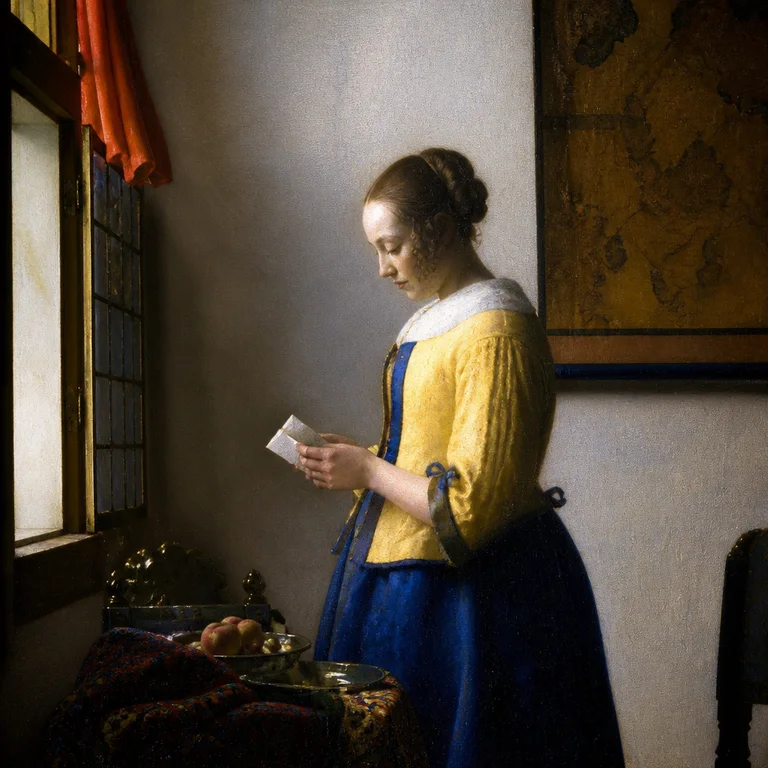
Dutch Golden Age (Vermeer)
The Dutch Golden Age (roughly 1620–1680) produced an unusually coherent body of small, intimate, light-driven paintings. Within that move…
Open style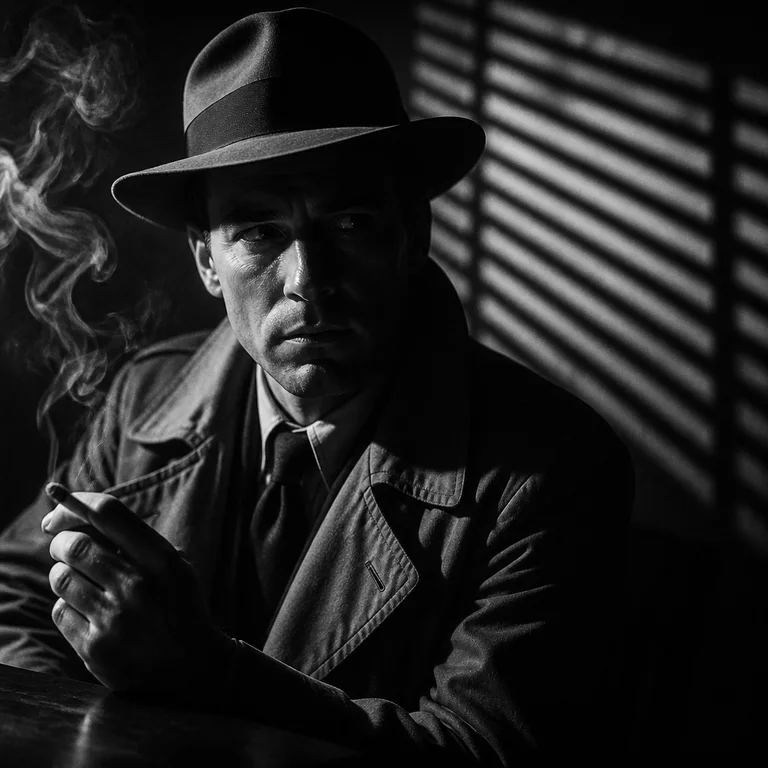
Film Noir
Film noir is not just "black and white." It is a specific photographic grammar built in 1940s Hollywood out of three constraints — German…
Open style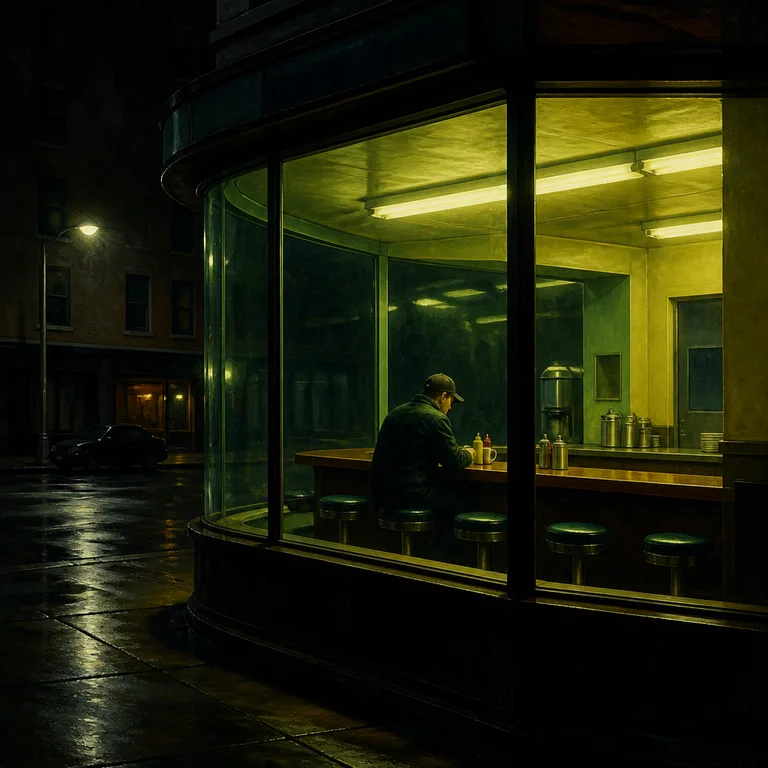
American Realism (Hopper)
Edward Hopper is the canonical American Realist of the twentieth century, and his particular contribution is a vocabulary for painted lon…
Open style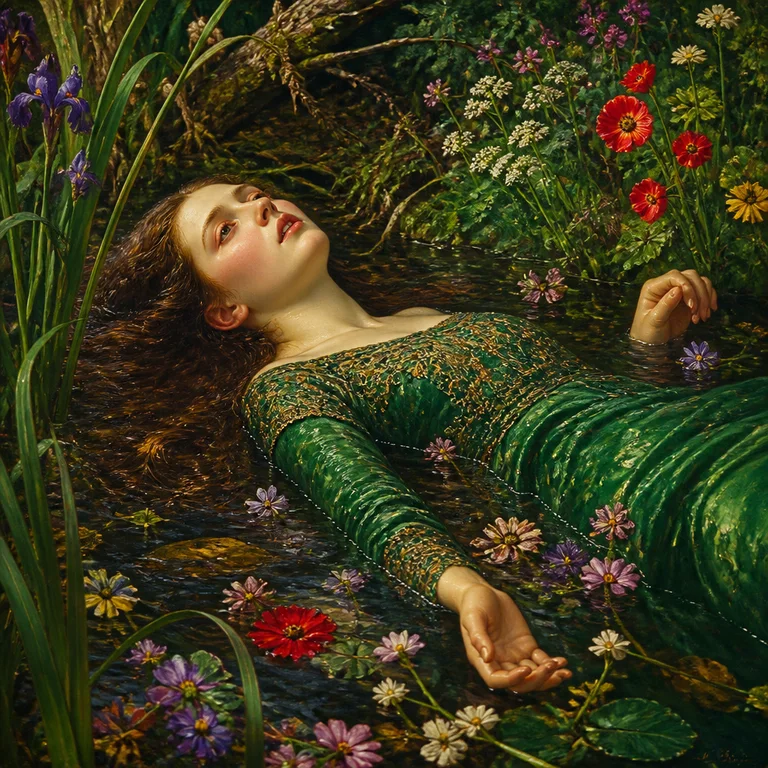
Pre-Raphaelite
The Pre-Raphaelite Brotherhood was a small group of British painters — initially Dante Gabriel Rossetti, John Everett Millais, and Willia…
Open style