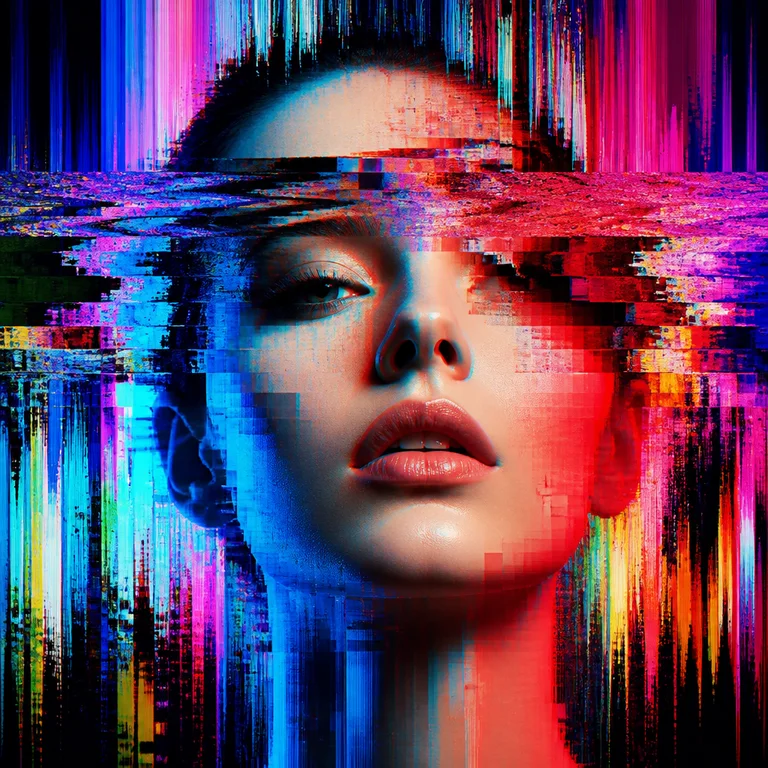
Description
Glitch and databending describe a family of techniques that produce intentional image corruption — usually by editing the binary or compressed data of an image file directly (databending), forcing format conversions between incompatible codecs, sending JPEGs through audio plugins, or simulating analog video errors (datamoshing) on digital footage. Visual signatures: horizontal band tearing that misaligns rows of pixels; chromatic aberration where R, G, and B channels separate and shift; macroblock smearing from corrupted MPEG/JPEG headers; pixel-sorting (Kim Asendorf's algorithm, 2010) where pixels are rearranged within rows by brightness or hue; replicated header artifacts producing repeating tile patterns; intentional RGB-channel offset and posterization; CRT-scanline overlays as a complementary visual idiom. Use it for music videos, album covers, glitchy editorial, vaporwave-adjacent work, tech-anxiety editorial, distorted portraits, and any composition that should feel digital-broken or system-failing. Limitations: not for clean, naturalistic, or print-traditional aesthetics. Generative models will give you "looks like glitch" mush — specify "databent image, horizontal band tearing, RGB chromatic aberration channel offset, macroblock smearing from corrupted JPEG, pixel-sort vertical streaks by brightness, replicated header tile artifacts, Kim Asendorf or Rosa Menkman lineage."
Three pioneers
Every style in this catalog names three verifiable pioneers. This is the part of the drop test that takes the longest to write and is the easiest to spot when it's missing.
-
Rosa Menkman
Dutch artist and theorist, born 1983. The Glitch Moment(um) (2011) is the foundational theoretical text on glitch as an art form. Her 'Glitch Studies Manifesto' (2009/2010) defined the field's vocabulary and ethics.
-
Kim Asendorf
German artist. Wrote the canonical pixel-sorting algorithm (2010, ASDF Pixel Sort), which became one of the most widely used glitch techniques and is now standard in tools like Adobe After Effects and Glitché.
-
Nick Briz
American artist and educator. Co-organizer of the GLI.TC/H conference series (Chicago, 2010–2012) and producer of widely-used databending tutorials. Helped institutionalize the field through educational programming.
Contemporary revival
Beeple's NFT auction (2021), the broader 'crypto-art' / NFT aesthetic that absorbed glitch as visual shorthand (2021–2023), and the persistent presence of glitch in music-video and album-art design (Kanye West Donda, FKA twigs MAGDALENE, Arca KICK i–v)
Beeple's Everydays: The First 5000 Days sold for $69M at Christie's in March 2021; many of the constituent images use glitch aesthetics. FKA twigs' MAGDALENE (2019) and Arca's KICK series (2020–2021) used glitch as a primary visual idiom and were widely covered in critical press. #glitchart on Instagram exceeds 4M posts. Hyperallergic and Rhizome continue to cover the field; Rhizome's preservation work on early glitch artists is an active institutional program. The 2024 Sora 2 release re-popularized 'AI glitch' aesthetics on TikTok.
Working prompts
Three prompts we've tested against current FairStack models. Copy and run.
-
databent portrait, woman's face with horizontal band tearing across forehead, RGB chromatic aberration channel offset shifting red right and blue left, macroblock smearing from corrupted JPEG header, pixel-sort vertical streaks of color in background, Kim Asendorf algorithm
-
glitch art landscape, mountains and sky with severe pixel-sorting by brightness creating vertical streaks, replicated header tile artifacts in lower third, CRT scanline overlay, saturated digital palette
-
datamoshed video still, dancer mid-motion with macroblock smearing trailing behind movement, chromatic aberration, broken codec artifacts, intentional digital corruption
Recommended models
Models from FairStack's catalog that handle this style best. Sorted by price.
Related styles
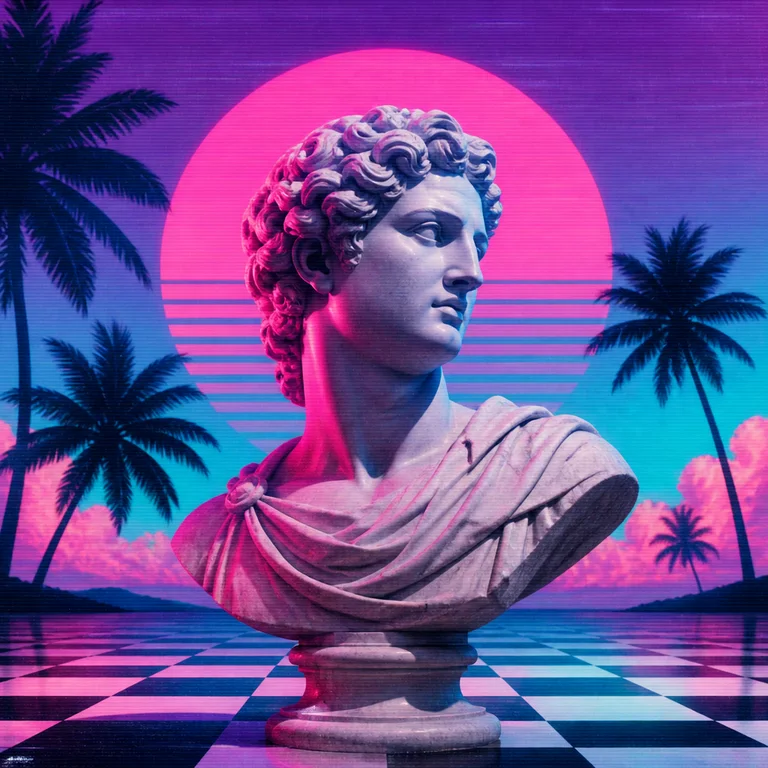
Vaporwave
Vaporwave is the internet-native aesthetic that emerged around 2010–2012 from chopped-and-screwed remixes of 1980s muzak, smooth jazz, an…
Open style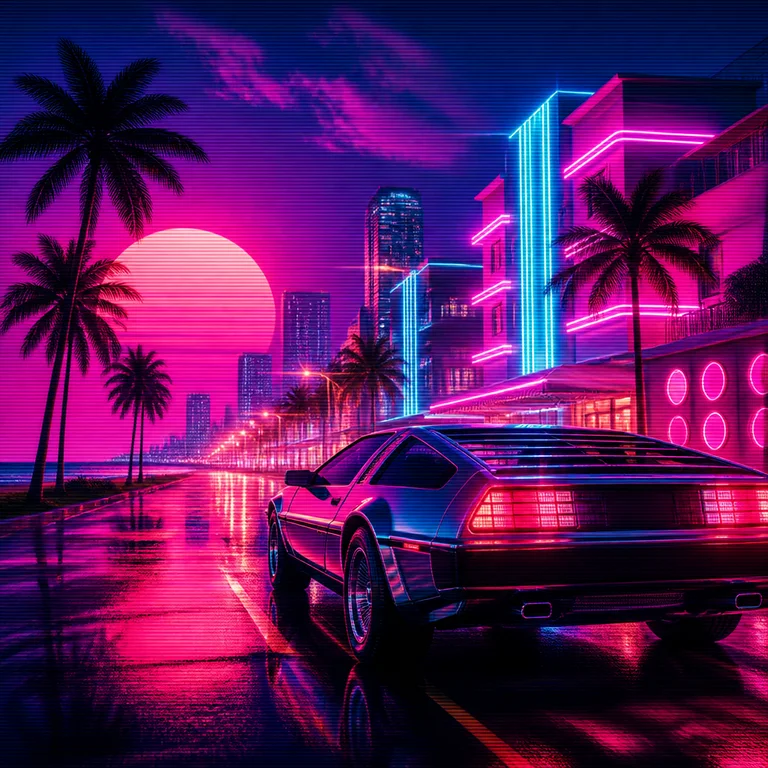
1980s Neon / Synthwave
Synthwave (the music) and the 80s-neon visual aesthetic (the look) are two halves of the same retro-future revival. The visual rules are…
Open style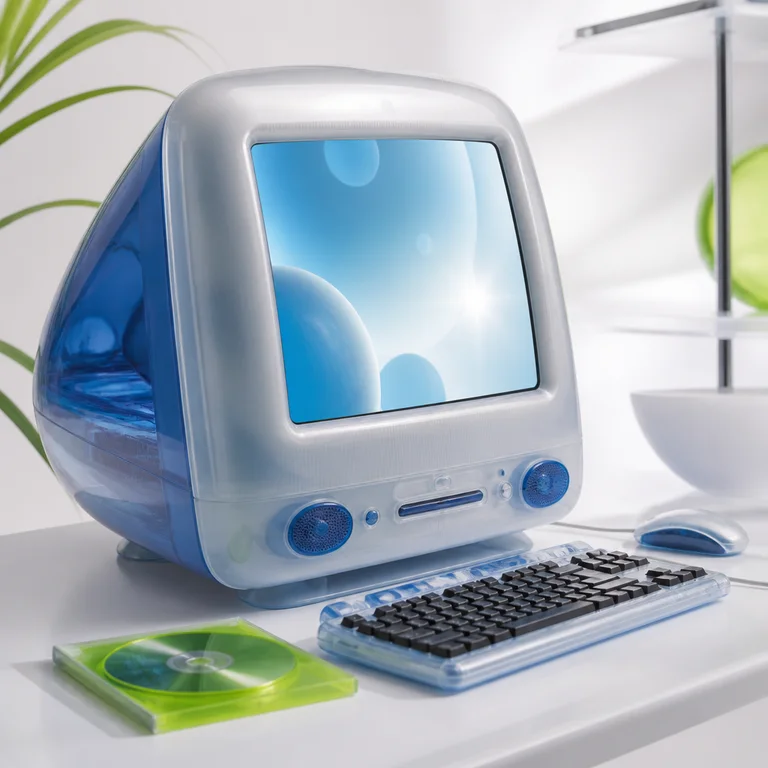
Y2K Frosted Glass
Y2K (roughly 1998–2003) is the consumer-electronics-and-fashion aesthetic of the late dot-com era. The visual rules: translucent and fros…
Open style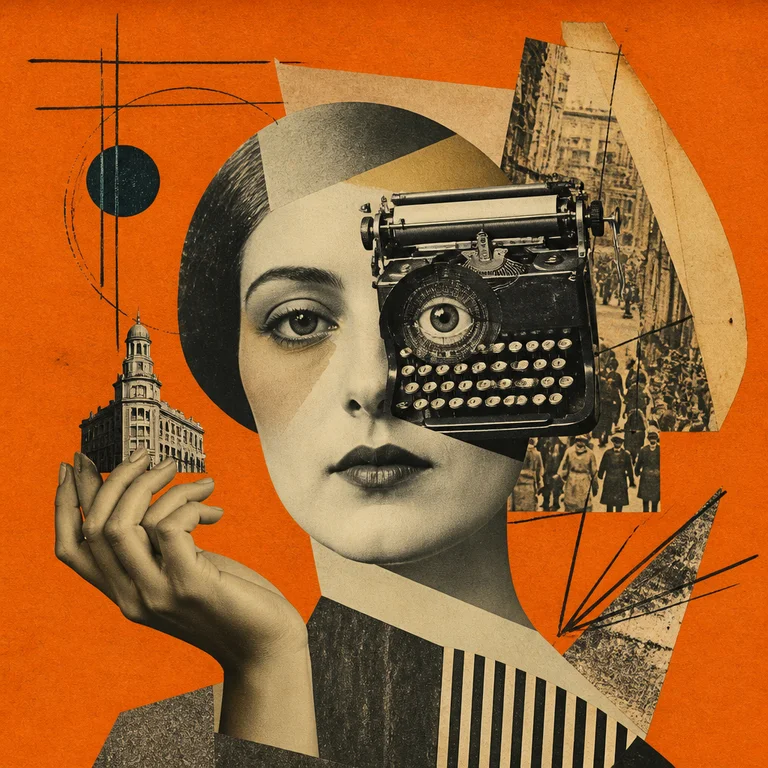
Photo-Collage (Hannah Höch Lineage)
Photographic collage as a fine-art form has a continuous lineage from Berlin Dada in the 1910s — where Hannah Höch coined what she called…
Open style