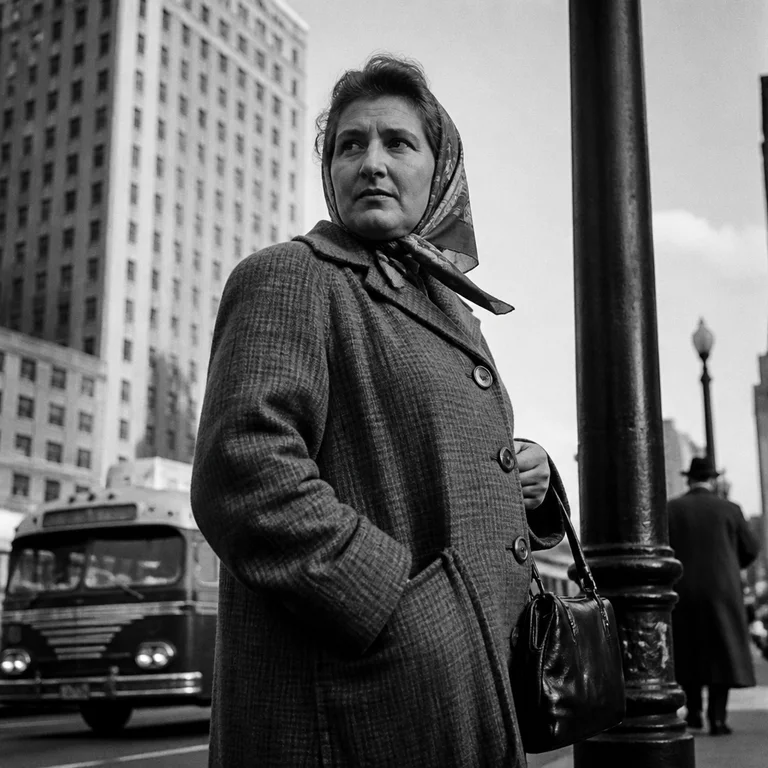
Description
Vivian Maier worked as a nanny in Chicago and New York from the 1950s through the 1990s and shot roughly 150,000 photographs that nobody saw until John Maloof bought a box of her negatives at a Chicago auction in 2007. She died in 2009 with the discovery just underway; the posthumous reputation is now among the most secure in twentieth-century American photography. Visual rules: square 6×6 negatives from a twin-lens reflex Rolleiflex held at waist level, which produces a slightly upward angle on subjects who didn't know they were being photographed; black-and-white film with full mid-tonal range — not pushed, not crushed; mid-century American street subjects (kids on stoops, women at lunch counters, men in fedoras, urban detritus); a recurring pattern of self-portraits caught in mirrors and shop windows; an unsentimental, almost forensic attention to the working- and middle-class subjects who were her actual neighbors as a nanny. Use it for mid-century American street, candid documentary, vintage urban editorial, and any black-and-white image that should feel found rather than composed. Models will default to "vintage black-and-white photography." Specify "Vivian Maier Rolleiflex waist-level square format, slight upward angle, 1950s Chicago or New York street, working-class subjects unaware of camera, full mid-tonal range, found candid composition, occasional reflection-self-portrait in shop window."
Three pioneers
Every style in this catalog names three verifiable pioneers. This is the part of the drop test that takes the longest to write and is the easiest to spot when it's missing.
-
Vivian Maier
American street photographer, 1926–2009. Worked as a nanny in Chicago for most of her adult life. ~150,000 negatives discovered posthumously in 2007 by John Maloof. The documentary Finding Vivian Maier (2013) was Oscar-nominated.
-
Lisette Model
Austrian-American photographer, 1901–1983. Defined the unsentimental mid-century American street and beach portrait — close, direct, often unflattering. Diane Arbus's teacher. The lineage Maier inherited through New School pedagogy and circulation.
-
Roy DeCarava
American photographer, 1919–2009. The Sweet Flypaper of Life (1955, with Langston Hughes) established the mid-century African-American Harlem street tradition. The other major mid-century street eye, working in parallel to Maier without contact.
Contemporary revival
The 2013 documentary Finding Vivian Maier (Oscar nomination, theatrical release), the persistent traveling Maier exhibitions, and the broader 'Rolleiflex square format' revival in contemporary street photography
Finding Vivian Maier (2013) grossed over $1.5M theatrically and was nominated for Best Documentary at the 2015 Oscars. The Maier estate has produced over a dozen monographs through powerHouse Books (2011–present) and major touring exhibitions through HackelBury Fine Art and Howard Greenberg Gallery. Maier prints regularly sell at auction for five figures. #vivianmaier on Instagram exceeds 350K posts. Rolleiflex twin-lens cameras have tripled in secondary-market prices since 2014 per KEH Camera; YouTube tutorials on 'shoot like Vivian Maier' have tens of millions of cumulative views.
Working prompts
Three prompts we've tested against current FairStack models. Copy and run.
-
Vivian Maier Rolleiflex 1955 Chicago street, square 6x6 black and white, slight upward angle from waist-level camera, working-class woman in headscarf at bus stop unaware of photographer, full mid-tonal range, candid found composition
-
Maier-style square black-and-white street, two children on stoop, mid-century American urban background, waist-level perspective, unsentimental documentary feel
-
self-portrait reflection in 1950s shop window, photographer holding Rolleiflex at waist, faint figure visible behind glass, square black-and-white frame, Vivian Maier aesthetic
Recommended models
Models from FairStack's catalog that handle this style best. Sorted by price.
Related styles
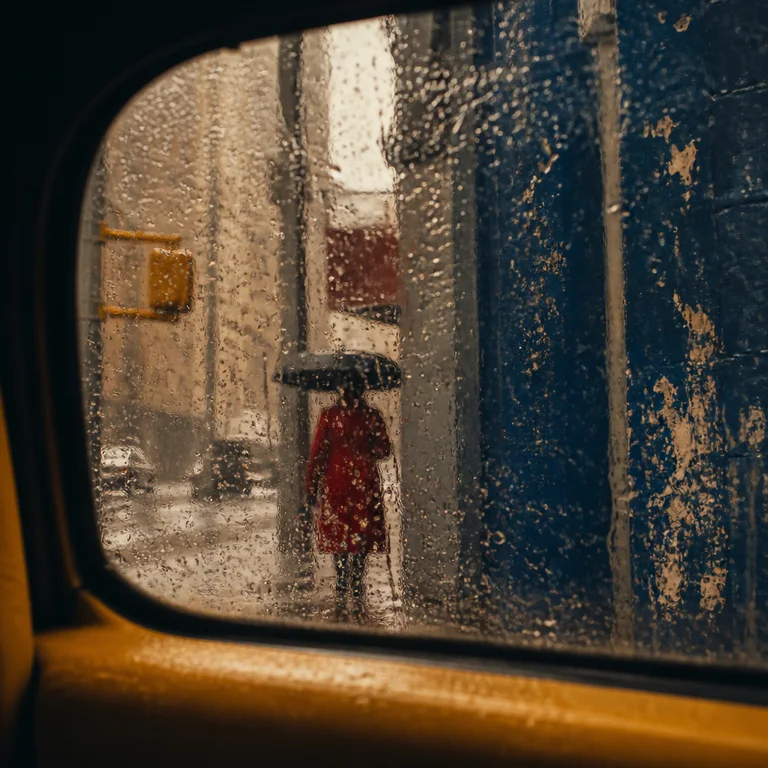
Saul Leiter Street Color
Saul Leiter shot color street photography in New York from the late 1940s through the 1970s while almost nobody else was — Walker Evans a…
Open style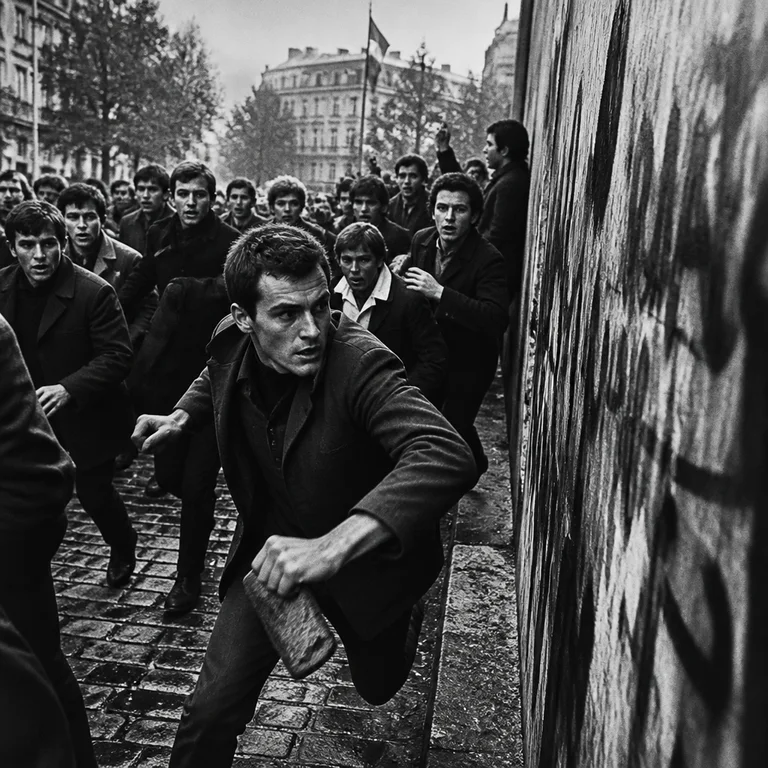
Magnum Documentary
Magnum Photos was founded in 1947 by Henri Cartier-Bresson, Robert Capa, David "Chim" Seymour, and George Rodger as a photographer-owned…
Open style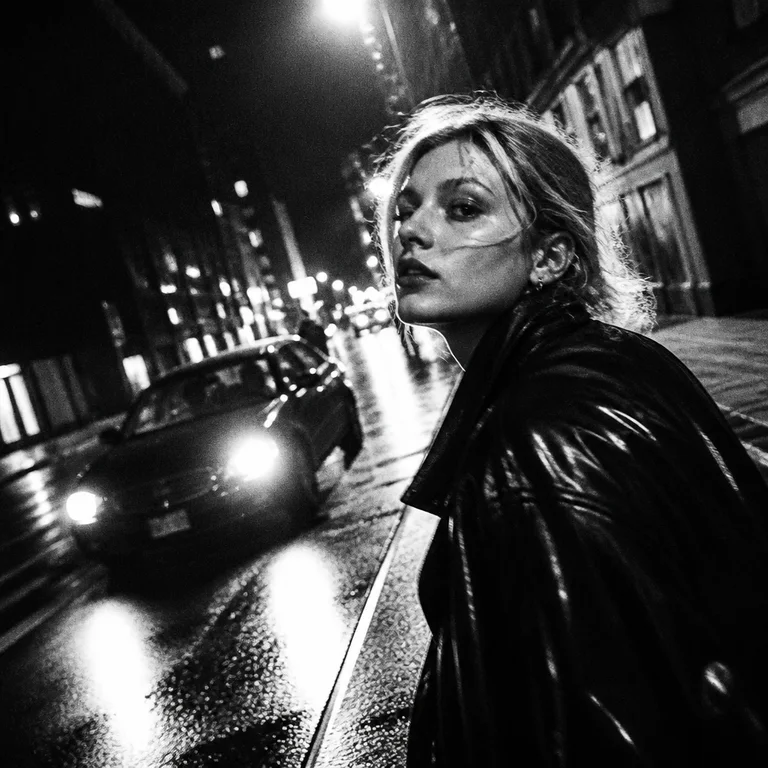
Daido Moriyama High-Contrast B&W
Daido Moriyama's photographs of postwar Tokyo are the most influential street photography to come out of Japan. The visual signature is e…
Open style
35mm Film Photography
35mm film photography is the look of the dominant consumer and editorial photographic format of the second half of the twentieth century.…
Open style